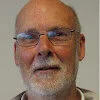
SUZANNE BREEN, Belfast Telegraph, March 17th, 2025
HIS GRANNY ON SHANKILL ROAD REFUSED TO BUY IRISH GOODS AND SOME OF HIS FAMILY DISTANCED THEMSELVES AFTER HE GOT INVOLVED WITH GLENAVY GAC, BUT THE POLITICIAN IS PROUD TO HAVE CROSSED THE SECTARIAN DIVIDE
David Honeyford's childhood offered no indication of how his life would unfold. He was taken to loyalist band parades by a grandmother who checked supermarket labels to ensure she bought no Irish products.
The son of a Presbyterian minister, he studied theology at Bible college, and his first foray into electoral politics was as a pro-Union candidate.
Today, Honeyford is heavily involved in his local GAA club, has more than a cúpla focal, has never missed a Shared Island meeting, and is an Alliance MLA in Lagan Valley.
While many talk about crossing the sectarian divide, he walks the walk every day.
The GAA involvement led to some relatives of his wife Elaine “divorcing” the couple.
“They just cut us off completely,” he says.
“People we'd been very close to, people we'd holidayed with. But I have absolutely no regrets.
“It's wonderful to feel part of this one big GAA family. I've made so many new friends. It's really indescribable. It's so much more than sport.
“I never experienced anything like it growing up. It has enriched us as a family.”
Honeyford (50) was born in Bangor, where he lived until he was 13 and the family moved into the Presbyterian manse in Lisburn.
He went to Lagan College, yet his family's background was staunchly unionist.
Honeyford was particularly close to his maternal granny, who had owned a chip shop on the Shankill.
“I was taken to band parades and the Twelfth,” he recalls.
“I loved going to my granny's house in Ballysillan. She had plates of Charles and Diana, and other members of the royal family, hanging on her walls alongside her Union Jack clock until the day she died.
“When she went shopping at Tesco's, she'd check all the labels to make sure she wasn't putting any Irish produce in her trolley.”
Sunday Sport - ‘no harm at his age’
Honeyford recalls how he had tried to hide it from his grandmother when his son Tim began playing Gaelic football.
“Even the fact he was playing on a Sunday presented challenges for us. We'd never traditionally done anything on a Sunday. For my entire family and Elaine's, it was a day of rest,” he explains.
“My granny wouldn't cut the grass or hang out the washing on the Sabbath. Tim would play Gaelic in the morning, then we'd go to my granny's.
“I'd make sure he'd put on a rugby jersey over his Gaelic top. Then, one afternoon, the house was roasting and he unthinkingly took it off.
“My granny clocked it instantly. I saw her eyes focusing on the badge. We talk about this stuff but, as a family in that moment, we were living it.
“The GAA top challenged her, but then Tim was her great-grandson, so she was okay with it. She didn't hit the roof. 'It won't do any harm at his age,' she said.
“Had it been anybody else, she'd have destroyed them. But she had to change because she loved him.”
Honeyford's own youth had revolved around the Presbyterian Church. “In Lagan Valley, like many rural areas across Northern Ireland, the church is the community,” he says.
“So there was the Boys' Brigade one night, badminton the next, and the youth club the one after that. It was just how things worked.”
He and Elaine — who is a special needs teacher working for the Education Authority — met through the church when they were teenagers.
One incident from the MLA's childhood had a significant impact.
“I played on the Boys' Brigade football team and our coach was a Catholic,” Honeyford recalls.
“He was brilliant and we all asked that he do a reading at our annual church service. The Presbyterian elders stopped him. They wouldn't let him read the same words from the Bible that they read. I thought it was shameful.”
Honeyford believes he is the only MLA to have attended an integrated school. “I feel blessed to have done so. It's only now that I realise how much it would changed my outlook on life.
“I remember walking past Free Presbyterian protesters outside the school and thinking: 'I don't want to live like that'.”
A strong faith
He hates how religion has “warped” society here. “It has been abused in Northern Ireland politics and employed as a means of manipulating people,” he says. “I don't go to church enough, but I believe in God and still have a strong faith.”
Honeyford went to South Bank University in London to study environmental science. “I lasted just one year,” he says. “It wasn't for me. I hated the course, but I loved London.
“Even then I had the politics bug. I'd go to the House of Commons to watch Prime Minister's Questions. John Major was in Number 10, and it was the very early days of the peace process here. I would have been a soft conservative then.”
On quitting university Honeyford came home and went to Bible college in Moneymore to study theology for the next two years. After that he started an audio-visual business fitting out churches, hotels, restaurants and bars with speakers and microphones.
He was approached about joining the UUP several times.
“I did consider it, but it wasn't quite the right fit for me,” he says.
In 2014 he was invited to a NI21 meeting. “The guest speaker was commentator Alex Kane along with John McCallister, who had founded the party with Basil McCrea.
“It sparked my interest in politics and I agreed to run in the council election. But the party had fallen apart by polling day,” he says.
“I got 400 votes, which I was happy with given the circumstances. After the election I was contacted by the then local Alliance MLA Trevor Lunn. He invited me to join the party, which I should have done from the start.”
Honeyford became a member of Alliance's ruling executive in 2016, but stepped down from the role the following year after tweeting — in the wake of the cash-for-ash scandal — that unionists were “bred to hate Catholics more than corruption”.
The comment was condemned by unionist politicians. “It was a really badly worded tweet,” he says.
“I did the right thing and resigned my position. I wasn't an elected representative, and there are people in other parties who have said worse and not quit. I could give lots of examples, but I won't.
“I made that remark as someone from a Protestant/unionist background. But I'm not justifying the tweet. It was wrong.”
Honeyford was elected to Lisburn and Castlereagh Council in 2019. Three years later he became Lagan Valley's second Alliance MLA.
He was heavily involved in Sorcha Eastwood's successful Westminster election campaign last year.
“We get on like a house on fire,” he says. “We work well and hard together. We've very similar views and ambitions for this place. Sorcha jokes that I'm her work husband.”
Honeyford has two children. His daughter Emma is studying law at Trinity College Dublin, while his son Tim started work at PricewaterhouseCoopers this week after graduating in criminology from Loughborough University in Leicestershire.
Felt more Irish in England and less Irish in Dublin
“Tim said he never felt more Irish than when he was in England, and Emma said she never felt less Irish than when she moved to Dublin,” he says.
“She loves it now, although she's still teased about her accent. But, initially, she felt she wasn't quite the full pedigree because she was from the north.
“We always talk about ourselves up here. We never talk about how the south needs to fully engage with us if there is to be true reconciliation.”
Honeyford's involvement with the GAA began 16 years ago when he was coaching at Lisburn Rugby Club, where Tim played.
“One of the other kids also played for Glenavy GAC, and his dad suggested we do a Gaelic session with the rugby kids and a rugby session with the GAA kids to show them all another sport,” he says.
“I lived about two miles from Glenavy, but I didn't even know where the GAA club was because my life didn't take me there. That reflects the division we have in Northern Ireland.”
Honeyford's son loved Gaelic football. “Tim ended up playing the whole season, as did eight other rugby kids,” he says.
Rugby and GAA
“When Glenavy won the county shield, a third of the team had a rugby background, and one of the GAA kids ended up at the Rugby Academy. Tim has never looked back. He captained the senior team last week.”
Honeyford remained involved with Lisburn Rugby Club, but was also invited to become development officer of Glenavy GAC. “I was absolutely thrilled to be chosen as the club's person of the year in 2018,” he says.
“I can't begin to explain how important that was to me. All I'd heard constantly from the unionist side was: 'You're there, but you're not really accepted'. The award proved them wrong.”
On the redevelopment of Casement Park, he shares the frustrations of GAA president Jarlath Burns. “The money must be found, building Casement has to be a priority,” he says.
“It seems that Gordon Lyons isn't focused on finding a solution, but is sitting on his hands. The whole thing is being dragged out to allow it to fail. It's already an embarrassment that Northern Ireland will miss (out on) the Euros.”
He remains involved in reconciliation work. “It's fundamental to me,” he explains. “Sport is a great way of bringing people together. I've worked to build relations between the GAA, the Orange Order and loyalist bands. We even had a night with loyalist band music and traditional Irish music. That's what it's all about.”
Won’t sit on the fence
The Alliance MLA has attended Ireland's Future events, but describes himself as neither nationalist nor unionist.
“My focus is on a shared society,” he says. “I sit outside the constitutional question. When a border poll is called, I'll make a decision on whether to support the Union or a united Ireland based on the evidence put in front of me.”
Honeyford believes Alliance won't sit on the fence during a referendum campaign. “I would be surprised if we didn't make a recommendation,” he says. “We'd weigh up the positives and the negatives for the health service, the economy, education and the environment.
“I think it would be natural for us to come to a conclusion when a border poll is called, but it's not one we can reach now.”