Upcoming Legacy Act debate cannot hide reality that our current system fails victims
ALLISON MORRIS, Belfast Telegraph, November 17th, 2025
Tomorrow, MPs will debate the proposed changes to the controversial Legacy Act, the piece of legislation that will determine how we deal with thousands of unsolved murders linked to Northern Ireland's troubled past.
Prior to coming into power, Labour had pledged to repeal the legislation in their manifesto; instead they are tinkering around the edges of it and, according to some, making it worse.
Debates about Northern Ireland usually take place to an almost empty chamber.
However, the prosecution of former soldiers makes this debate one that has the attention of backbenchers, particularly those in constituencies with a large military presence.
There remains a disagreement on a way forward in dealing with legacy, so we can therefore expect some robust exchanges in the chamber.
Currently, we have the Independent Commission for Reconciliation and Information Recovery (ICRIR) headed up by former Lord Chief Justice Declan Morgan, working on around 100 cases referred to his body by victims' families.
Separately, there are unfinished inquests, an inquiry pending into the murder of solicitor Pat Finucane, and calls for a inquiry into the murder of Sean Brown.
Along with that, the final Kenova report on the activities of the informer known as Stakeknife, along with the Operation Denton report into the activities of the loyalist Glenanne Gang, have still to be published.
This includes a report into the 1974 Dublin and Monaghan bombings, the largest terror attack in the history of the Republic that claimed the lives of 34 innocent people, including a full-term unborn child.
As reported in this newspaper, the publication of the findings of Operation Denton was expected to be released later this month.
Denton naming of bomb suspects triggers more litigation
The Denton team have already travelled to Dublin and provided a briefing to the campaigning families of the victims and survivors of the bombings. This included officially naming those involved in the bombings for the first time, albeit in a private briefing in a city centre hotel.
While the names have been speculated in news reports over the years, this was the first official naming of suspects.
That has triggered families of at least two of those named to lodge legal proceedings.
Given the speed at which our court system works, this judicial review could delay the publication of the report, which might well suit the Government, which would prefer it if legacy was all neatly confined to the ICRIR process.
Nationalist families have signed up to the ICRIR, but they are still in the minority, with those families represented by the main victims' groups originally boycotting the process.
However, there has been a political softening of stance in relation to the truth recovery body.
There will still be an amnesty for information, albeit the blanket amnesty for all involved is no longer part of the process, something the previous government wanted to introduce to prevent further prosecutions of soldiers.
Conditional Amnesty for specific information
Instead, it will be a conditional amnesty for specific information given to the ICRIR, something that is already in place when it comes to locating the remains of the disappeared victims of the IRA.
While it was widely publicised that senior republicans were interviewed by the Kenova team — most in the presence of their legal teams — it is less clear how that process was carried out during the Denton review.
Kenova was a criminal investigation, whereas Denton is a thematic overview of a series of killings linked to loyalists, therefore both operate in a different legal framework.
There were recommendations for prosecutions by Kenova to the PPS, albeit the PPS declined to take the cases forward.
It is less clear what, if any, involvement members of the loyalist paramilitary groups played in the Denton review, what assurances they were given, whether that was lawful, and if this has left the door open for any future prosecutions.
It once again shows how unfit for purpose our current legacy system really is — a patchwork of mechanisms, none of which offer any real justice, working at times against each other and most certainly not in the interest of victims.
Boucher wants more openess
PSNI Chief Constable Jon Boutcher has said he wants more transparency in opening the door to truth, which involves previously classified intelligence material.
As the former head of the Kenova team, he expressed frustration at being unable to name Stakeknife as Freddie Scappaticci, the IRA executioner and Army spy, reporting to MI5 on the very organisation he killed for.
Despite being unmasked in the media in 2003, due to the 'never confirm, never deny' policy, he is not named in the Kenova report.
Boutcher expressed frustration that, despite dying in 2024, Scappaticci cannot be officially named and called for a relaxing of the policy in circumstances where the informer is dead.
This is being strongly resisted by the intelligence agencies who claim it will impact on their ability to recruit future informants.
There are now fears of tensions between the intelligence services and elements of the PSNI in relation to legacy and what should and should not be disclosed.
The Denton briefing will have done little to ease those tensions.
In the meantime, in the absence of an acceptable framework, the courts are still being used as a legacy battleground, and that is a far from ideal situation.
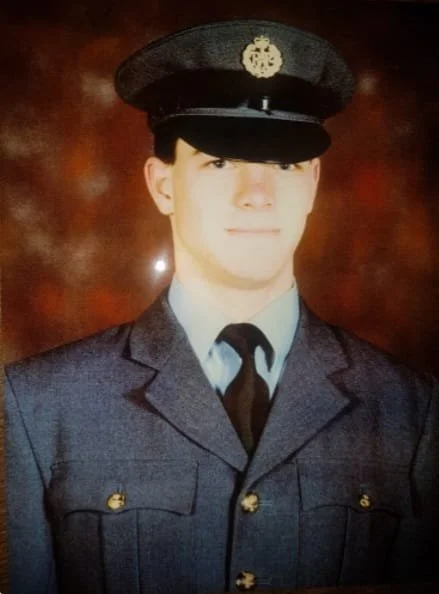
Raymond McCord, former RAF member killed by UVF members
RAYMOND McCORD, SENIOR
I’m going to London on Tuesday to watch the Legacy Bill debate in Parliament.
To me it's important that, as a victim of the Troubles and especially being a father whose son was murdered as a result of proven collusion between the state agencies (the police and state agents in the terrorist UVF organisation) I will be in the gallery watching the debate.
For 28 years the British government and the security agencies have stopped anyone from being charged with young Raymond’s murder.
We still have not had an inquest for young Raymond.
I hope the politicians in Washington will hold another Congressional Hearing into my son’s murder and the collusion involved.
I am from the unionist community and yet not one Unionist First Minister has ever openly supported truth and justice for my son. Arlene Foster wouldn't even meet me.
It has been a long journey fighting for justice and I thank the Irish National Caucus for their fantastic support.
The British government and its agencies can be left in no doubt that I won't give in or stop until I get the truth and justice that young Raymond deserves.
False promises and coverups
It is important that I be in the public gallery during Tuesday's debate on the Legacy Bill as it sends a clear message to all the politicians in the British Parliament that the victims aren't going away.
Government after government has betrayed the victims with false promises and coverups.
Jim Shannon MP has been fantastic in Westminster in raising young Raymond’s case on more than one occassion.
Because of this true and honest man I can be there on Tueday, which means victims are being represented and have a voice in the public gallery. It will be a victims voice.
Unionist, nationalist, Protestant or Catholic means little to me as we are all victims first and foremost.
The state allowed my son to be murdered and I will never allow them to stop me fighting for truth and justice for young Raymond.
Presbyterian Church safeguarding scandal began after child sex offence conviction
By Philip Bradfield, Belfast News Letter, November 16th, 2025
The Church announced last week that a review had found “serious and significant failings” in central safeguarding functions from the period 2009 to 2022
The crisis rocking the Presbyterian Church began following the conviction of an individual for child sex offences.
Asked what prompted the safeguarding investigation, Church Convenor Rev David Bruce said their attention was drawn to an individual who had been convicted of crimes – confirmed by police to be child sex offences.
"It transpired that he had connections with the Presbyterian congregation and the police service suggested that we would look into this,” he said.
Speaking to the BBC’s William Crawley in recent days, he continued: "Once we had begun to look into this, we discovered that our systemic problems were more than merely the issues that were presented in this particular case, and as a consequence of that, we extended the remit of our work to examine from a root and branch point of view, our entire safeguarding practice."
Resigning
On Wednesday, Moderator Rev Trevor Gribben announced that he is resigning because he was the administrative leader of the church when serious safeguarding failures took place from 2009-2022.
(The church told the News Letter that its constitution requires the previous moderator, Rev Richard Murray, to step back into the role until June 2026 and that Rev Gribben will stand down at the end of this month.)
The church does not know how many people were harmed but say it is "low single figure digits".
It has set up a response line for others to come forward.
Records of alleged abuse were not kept, which Rev Bruce agreed on the BBC was "outrageous", adding that it is "very easy for an institution to become culturally lazy".
Rev Bruce, who was moderator in 2021, said a statutory body, the Safeguarding Board for Northern Ireland, has already been asked to do a complete audit of the church.
It was not a mistake to install Rev Gribben as moderator in June, said Rev Bruce, because the information available today was not available then.
The church's own investigation report will not be published because it identifies individuals, congregations and live cases, he said.
All the "salient" points were published in his statement to the media on Wednesday, he added.
Asked if the church had failed in mandatory reporting to outside authorities, Rev Bruce told the BBC that they "conform to regulatory principles".
"If there are examples of failings which are illegal, that will be a matter for the police and the courts," he added.
The News Letter asked the church for a timetable on how and when it will address the failures and provide transparency. It replied that "it hopes to make an announcement in the coming days".
Detective Chief Superintendent Zoe McKee, head of the PSNI’s Public Protection Branch, said: “The Police Service of Northern Ireland has been actively engaged in ongoing discussions with the Presbyterian Church in Ireland (PCI) to ensure that mechanisms are in place to support any victim who wishes to make disclosures.
Police said the these discussions “followed concerns raised by PCI following the conviction of an individual in 2024 for child sexual offences”.
She added: “The PSNI remains committed to working in partnership with all relevant agencies and organisations to ensure that robust safeguarding measures are in place to protect vulnerable individuals.”
Charity Commission
“If you or anyone you know are concerned or wish to report a crime to police, we have dedicated detectives trained to investigate and support all victims of abuse.
“Please come forward by calling 101 or a report can be submitted online using the non-emergency reporting form at www.psni.police.uk/makeareport/ “.
The Charity Commission gave the News Letter a series of actions it normally expects of any charity after historic safeguarding failures. They are;-
:: Ensure that all relevant statutory bodies and regulators are informed
:: Ensure victims know how to report additional concerns and access support
:: Review internal safeguarding policies, procedures and controls to prevent recurrence
:: Communicate openly with stakeholders while respecting confidentiality and legal considerations
Presbyterian ministers 'told not to speak out' after apology from pulpit
BRETT CAMPBELL, Belfast Telegraph, November 17th, 2025
MINISTERS ARE DESCRIBED AS BEING 'EFFECTIVELY PUT ON LEASH' OVER CRISIS
PCI's clergy feel 'left high and dry' to face public on safeguarding issues.
There is “palpable fear and anger” in pulpits across Northern Ireland after a statement from a senior leader of the Presbyterian Church in Ireland (PCI) was read to congregations yesterday.
Rev Dr David Allen, who is now the acting clerk of the general assembly, issued the correspondence which was read out in congregations during morning worship.
The Belfast Telegraph understands that ministers tasked with reading the apology for “inexcusable” and “distressing” safeguarding failures have been instructed not to publicly comment on the ongoing scandal.
“They have been told by PCI headquarters to read that out and refrain from any other commentary,” one source told this newspaper.
Others have described how clergymen and women have been “effectively put on a leash”.
It comes after churchgoers were told that last week's revelations, which resulted in Dr Trevor Gribben's unprecedented decision to resign as Moderator and retire from his other roles as clerk of the assembly and general secretary, is “just the start of a very difficult process” that is “going to last for some time”.
A third source said: “There is palpable fear and anger in churches, particularly among ministers who feel like they have been left high and dry to take the brunt of this.
“They are as shocked and horrified as everyone else and have now become the public face of this, being asked difficult questions they don't know the answers to. Everyone is in the dark.”
One local Presbyterian minister said they were “still reeling” yesterday before adding: “We all are.”
Rev Allen's statement confirmed that Dr Gribben's predecessor will resume the Moderator's role on December 1 and that Dr Richard Murray intends to announce a special meeting of the general assembly that will take place in the same month.
“I must say now that these failures are inexcusable, and no excuse is being made for them,” Rev Allen said.
“On behalf of the Presbyterian Church, I am deeply sorry.
“I'm sorry, firstly, because people have been let down by us. Through past actions, or not acting as we should, we have put people at risk, and we know that some people have been harmed.”
William Maher case brought failings to light
It was the case of former primary school teacher William Maher (38) — who was jailed in May for sex offences against two boys — that brought the safeguarding failings to light, according to the Sunday Life.
It's believed the convicted paedophile, who was sentenced to one year in prison and one on licence, was a voluntary church youth group leader.
Maher, of Kings Brae in Belfast, admitted three charges of inciting two children under the age of 13 into sexual activity between September 1, 2021 and May 24, 2022, in addition to three charges of sexual communication with a child involving two children.
As a result, he was barred from the teaching profession and from working with children.
The following month, he admitted multiple breaches of his sexual offences prevention order and received two-month jail sentences on each of the eight counts, to be served concurrently to the sentence he was already serving.
A three-year probation order had been imposed on Maher in May 2024 for communicating with two young boys for sexual gratification.
Dr Gribben refused to take questions after announcing his resignation last week and continued his silence over the weekend when confronted by Sunday Life outside his Carrickfergus home.
“No, speak to the press office,” he said.
‘Failings’ reported dating back to 2009
Rev Allen's statement acknowledged “distressing” reports of serious safeguarding failings between 2009 and 2022 and confirmed a probe is being launched into “the handling of past safeguarding issues at Assembly Buildings level”.
It also set out already-reported failings of the church to make referrals to statutory authorities when required, its inadequate responses to concerns about individuals in congregations, and its failure to respond properly when people sought help after suffering harm.
The senior clergyman said that a section 12 external audit designed by the Safeguarding Board for Northern Ireland is already underway to review practices and processes and insisted the church is co-operating fully with statutory agencies.
“We will not sweep this under the carpet, we will open ourselves to external review,” Rev Allen vowed.
Members wishing to disclose concerns about harm or abuse, whether it occurred in a church or somewhere else, were encouraged to do so by contacting the PCI response line set up at the end of last week.
Guidance available online
A QR code was displayed on screens in many churches containing links to advice and guidance available online.
Potential victims who are reluctant to contact the church were urged to reach out directly to the PSNI or Victim Support NI.
Rev Allen acknowledged that “we have betrayed the trust that people placed in us” as he expressed deep sorrow for the “hurt and grief” the shortcomings have caused to everyone affected.
Members were also reminded of the call to reach out to people around them and show love as the church leader confessed that “we have failed our saviour and Lord, we have dishonoured him”.
“I am inexpressibly grieved and ashamed by this — to dishonour our Lord in this way is beyond words.
“I ask you to join me in lamenting this, in seeking his forgiveness, and in asking for grace to do whatever he calls us to in light of our sin.”
Church mired in controversy still failing to answer the key questions
ANGELA DAVISON, Belfast Telegraph, November 17th, 2025
The statement read out to all Presbyterian congregations yesterday morning raises more questions than it answers.
The announcement from the Presbyterian Church in Ireland's Acting Clerk, Rev David Allen, came at the end of a tumultuous week for the denomination which saw the resignation of its leader, the first time that has happened in the role's 185 year history.
The extraordinary events of last week revealed that PCI had conducted an internal investigation which highlighted serious failings in safeguarding practices and culminated with the shock resignation of the church's Moderator, Dr Trevor Gribben. But as the church scrambles to journey through some form of crisis management, the statement read to faithful churchgoers yesterday didn't provide further clarity about what exactly happened to the “small number” of people who have made disclosures to the PCI within three congregations.
One retired minister described the contents of the statement as “pious claptrap”, which shows “an inability to be honest and transparent”.
It did almost nothing to fill in the gaps which those who pay into the church's coffers every week have the right to know.
Rev Allen confirmed the investigation into past safeguarding issues and admitted the church failed to monitor offenders returning to places of worship adequately.
Sunday Life revealed yesterday that it is the case of convicted paedophile and former primary school teacher William Maher of Kings Brae in Belfast that highlighted significant flaws in safeguarding procedures within the church.
Youth Group leader
The 38-year-old voluntary church youth group leader was jailed in May for sex offences against two boys. He was sentenced to one year in prison and one on licence.
But we don't know all the facts which led to the case exposing the church's failings.
There is also confusion around the timeline of when concerns were raised.
The PSNI said discussions around safeguarding began after concerns were raised by the church following the conviction of an individual in 2024 for child sexual offences.
PCI Acting Clerk David Allen said last week that the church began its investigation after receiving information from the PSNI that they were investigating a member of one of its congregations in May 2025.
Dr David Bruce said failings in safeguarding took place between 2009 and 2021, with one additional case in 2022.
Dr Bruce's statement also declared that the person with lead responsibility for this work during these years is no longer in post. So, who is that person and how were they responsible?
One of those in position as Head of Safeguarding for part of that time was Dr Jacqui Montgomery-Devlin, who is believed to have taken up the post in 2019 until her sudden departure last year.
It's believed she quit her post within a few weeks of the publishing of an article in February 2024 where she underlined the importance of safeguarding within the church setting, appealing for any victims to come forward.
In a separate video, she spoke about planned safeguarding roadshows to be taken to each presbytery in Ireland.
Video taken down
The video, which was uploaded to the church's website has since be taken down and the roadshows never took place.
On Friday, BBC Radio Ulster's Talkback programme revealed that Dr Montgomery-Devlin left the organisation after a dispute with church authorities which was resolved through a settlement and a non-disclosure agreement (NDA). No further details are known.
Questions need answered, too, about the church's use of NDAs.
How many times have they been used and how much of the church's budget has been eaten up in settlements with former employees and ministers?
Most importantly, have they ever been used to help cover up abuse in the church?
Which brings us to the role of the Charity Commission of Northern Ireland (CCNI) in all of this.
A 150-page dossier alleging abuse within the Presbyterian Church has been sitting on the desk of the charities' governing body for over three years but, as established through a Freedom of Information request, there are only three people on their enquiries team reviewing 550 cases, with CCNI admitting they are “inadequately resourced”.
Litany of abuse
The extensive report, commissioned by Lord Alderdice and compiled by former minister Roy Simpson, contains a litany of claims of abuse of power, bullying, harassment, stalking, false accusation, the inappropriate questioning of women and subjection to 'kangaroo courts'.
The report says that victims have been left traumatised, sick, experiencing breakdowns, fearful of litigation from the church and on the brink of suicide.
CCNI says it is examining disclosures in the dossier and is starting to review PCI's handling of its own internal report, raising the possibility of regulatory intervention.
Yesterday's statement also claims that PCI is embracing an “external review” and will be carrying out a Section 12 audit.
It's understood, however, that this is not a full external audit and is simply an internal review, to be submitted externally to the Safeguarding Board for NI.
Safeguarding experts say an independent enquiry is key to full transparency.
On December 1, last year's Moderator, Rev Dr Richard Murray, will take up the Moderatorship again and a special General Assembly will be called.
But will ministers finally be allowed to ask questions freely?
Safeguarding should be at the top of any organisation's agenda, especially a church's where children and youth work are a vibrant part of its community.
Families need to know the church is a safe place and that correct measures are now being implemented.
‘Serious flaw’ in Stormont expenses processes
CONOR COYLE, Irish News, November 17th, 2025
THE body which runs the Northern Ireland Assembly does not verify whether MLAs physically attend Stormont to claim travel expenses, it has admitted.
Around £650,000 has been claimed through the Assembly Travel Allowance (ATA) in the last three years, including close to two years when Stormont was down.
Around half of MLAs claimed the maximum amount for travel to Stormont during that time, with politicians from the furthest constituency of Fermanagh and South Tyrone able to claim up to £6,200 per year in mileage.
An Irish News investigation found examples of: l politicians not present at meetings they claimed to have travelled to, l references to ‘meetings’ where attendance is not verified by the Assembly. There were multiple instances of MLAs travelling hundreds of miles to ‘pick up mail and printer ink’, and examples of Assembly staff inviting MLAs to add additional days to their attendance records in order to reach the maximum claim amount possible.
No records of MLAs trips
MLAs must submit attendance records in order to verify their claims, however the Assembly Commission has admitted it does not have a record of when the members physically enter and exit the building and there is no independent attendance record.
Pat McCartan, former chair of the Independent Financial Review Panel, which made determinations and provided oversight of members’ pay and expenses, said the lack of verification was a “serious flaw”. The IFRP was not replaced when its term ended in 2016 and has now been defunct for close to a decade, but MLAs have now approved laws for a new body to set pay and expenses.
Expenses in spotlight again as MLA no-show at meetings she claimed that she attended
“Openness and transparency are paramount to upholding public trust in our system, and it appears to be lacking here,” Mr McCartan said.
“The current arrangements do not work because they don’t mirror the practice of the Independent Parliamentary Standards Authority at Westminster. Verifying expenses was the bread and butter of the IFRP. The fact there is no independent body in place to verify claims is a serious flaw of our current system.”
FoI request rejected
The Assembly Commission rejected an FOI request from The Irish News asking for attendance forms submitted by all MLAs, branding the request as “vexatious”.
Subsequent FOI responses for a smaller number of MLAs revealed a wide variety in how representatives filed their claims.
One MLA was not present at a number of meetings, which she said she travelled to Stormont for, including a meeting with a local health trust which dealt with hospital and maternity services in her local area.
The same representative also claimed ATA for a committee meeting she did not attend in 2021, as well as other committee meetings which she attended virtually.
The MLA also made a more than 100-mile return trip from her constituency to Stormont nine times in one year when Stormont was down, to “pick up post” and “printer ink”.
Forms submitted by another party’s MLAs include a table of options in which they used a tick box to confirm their reason for attending.
The majority registered by the MLAs were for “using your office in Parliament Buildings” or “meeting staff” with no specific details provided.
Another’s showed that in the last two years she has attended Stormont on more than 100 occasions each.
However, her submitted forms for 2023/24, when the assembly had collapsed, include multiple entries simply citing “meetings” or “media” as well as “picking up post”.
According to assembly rules, picking up mail is indeed a valid reason for travelling to Stormont from a constituency.
An assembly spokesperson said: “It is the responsibility of individual members to ensure compliance with the relevant determination. In order to recover expenditure under the provisions of the Assembly Members (Office and Staffing Costs and Allowances) Determination (Northern Ireland) 2025, Members must fully comply with all of its requirements, including the requirement to keep attendance records.
“The determination also requires members to make and submit an annual declaration, confirming they have complied with all the requirements of the determination. They are not entitled to recover costs in the subsequent year unless this is completed.”
The spokesperson added MLA were bound by their code of conduct, and any potential breaches should be reported to the Assembly Commissioner for Standards.
“Since 2016, to support claims for costs incurred, members are required to keep and retain records. On their claim forms, Members are required to declare that they have read and comply with the relevant rules and guidance, and kept adequate records to explain the reasons for any claims.
“Forms are checked to ensure any days claimed for are ‘qualifying days’, and the reasons are within those permitted by the rules.
“Members are also bound by the assembly members code of conduct, which includes both general principles of good and ethical conduct (such as the Nolan Principles in Public Life) and specific duties to comply with the rules around claims for allowances. Any potential breach of this Code can be reported to the Assembly Commissioner for Standards for investigation.”
Gerry Carroll, People Before Profit MLA, said: “The travel allowance system should be much more robust when requiring MLAs to show whether they attended Stormont or other relevant events.
“Events attended on specific dates should also be publicly available for the purposes of openness and transparency. Stormont has a sordid history of expenses scandals. We need to ensure that people aren’t using travel expenses to top up already high wages.”
Solidarity with family after racist attack
CONOR SHEILS, Irish News, November 17th, 2025
SCORES of people took to the streets of west Belfast last night in a show of solidarity with a Middle Eastern family targeted in a racist attack.
Members of the young family were violently assaulted in their Glen Road home on the evening of October 30.
Three men broke through the front and back doors of the home where a Middle Eastern woman lived with her two children.
They dragged a 10-yearold girl from her bed by her hair, and subjected the family to racist abuse while ordering them to leave the area.
The attack left both children and their mother deeply traumatised.
The family left their home and have now been housed in emergency accommodation by the Anaka Women’s Collective, which helped organise last night’s rally against racism.
One of the organisers of the rally, Nuala Ní Scolláin of Irish language group Glór na Móna, told The Irish News that many people turned out as they were “shocked” at the brutal attack.
“There was a great crowd – around 70 to 80 people, and it was organised at really short notice as well, so I’m delighted with how many showed up,” she said.
“I think people were shocked at what happened. People were shocked and very angry that this happened in the heart of west Belfast.
“The family are traumatised and we as a community now have to deal with the fact that it happened, and look at what the community response is now.”
‘Life was a such a struggle: on online abuse and raising daughters with autism
Suzanne Breen, Belfast Telegraph, November 18th, 2025
Leah Kirkpatrick is a rarity in the Ulster Unionists. An articulate and intelligent young woman, she is a breath of fresh air in a party where the overwhelming majority of representatives are middle-aged men.
The first female mayor of Antrim and Newtownabbey has got here the hard way. She grew up in the working-class loyalist Parkhall estate, and was thrilled to pass the transfer test, go to Antrim Grammar and later to Ulster University.
But just before the second year of her politics and criminology degree, she became pregnant.
“I was 19 years old, living in rented accommodation and working in a Spar shop,” she recalls.
“My mum’s view was that a baby’s always a blessing. My dad was more ‘I knew this would happen when you left home’. I decided not to take a year out of university because I feared if I did, I’d never go back.
“I was delighted when I found out I was having a wee girl, and excited about all things we’d do together.
I had Eva in April and sat my second year exams a fortnight later. I look back now and think ‘How on earth did I do that?’”
Leah’s mum and granny, and her now husband Gary’s mother, were “very hands on” with the baby as she continued with her studies.
A world turned upside down
Then her world was turned upside down again.
“We knew when Eva was about nine months that wasn’t developing like other children.
“I was going to lectures, working part-time, and chasing a diagnosis for her. When she was two, she was diagnosed with autism. Her autism is very profound. She’s completely non-verbal,” Leah says.
“She’s 12 years old now. She is still in nappies. She has severe, complex behavioural needs. I told the doctor when she was diagnosed, ‘I hope we can get some help now’.
“Her words to me were ‘I’m really sorry, this doesn’t make things any different. You’re already getting all the help we can give you’. As a mum you’re basically told ‘Your child has autism, see you later’.”
Leah (33) recalls those very tough years. “Life was a such a struggle, and you had to fight for everything. I gave everybody a hard time. There were lots of doctors and officials who likely tried to avoid my calls,” she says.
“The (Northern) Trust would only give out a certain amount of nappies and I’d be constantly phoning asking ‘Am I allowed to order nappies yet?’
“I fought with the Education Authority for Eva to be able to go to Riverside School in Antrim, which has been incredible and she loves. They’d wanted her to go to school in Ballymena. You get through one hurdle and then you’re presented with another one.”
Leah has a second daughter Emilie (10) whom she says has “high functioning autism”. She has Eva’s name tattooed on her left thigh and Emilie’s on her left arm.
On becoming Mayor
Becoming Antrim and Newtownabbey mayor was “surreal”, she explains. “There have been lots of ‘pinch me’ moments. People come into this building saying ‘Madam mayor’ and I’m thinking ‘That’s me!’ I’m not used to having a team around me and staff. It’s wonderful, but very strange.”
Leah was the eldest of three children. She struggled in her first year in Antrim Grammar. “I missed a lot of school due to an autoimmune condition. I suffered from anxiety. None of my primary school friends were there, so I felt very much on my own,” she recalls.
Her mother, Angela Smyth, worked in the local Spar while her father, Darran, was mostly unemployed when she was growing up.
Leah joined the Ulster Unionists 10 years ago. She has “nothing against” the DUP, but it never appealed to her.
“Doing A-level politics, I learned about David Trimble, and I liked him,” she says.
“I remember Reg Empey canvassing our house when I was a schoolgirl, and he stood chatting to me for ages in the garden. I related to the UUP. It felt like my political home.”
She has worked in the constituency offices of former South Antrim MP Danny Kinahan, ex-MLA Adrian Cochrane-Watson, and Steve Aiken. She currently works part-time for MP Robin Swann.
“I was content behind the scenes. I never thought the world of elected politics was for me. I lacked the self-belief to think I belonged in that space. Somebody suggested I run for council in 2019. I never thought I’d actually win a seat.”
Leah has “no ambitions” to become an MLA. “I’m told, ‘You’ve the top job now. You can’t go any further than mayor so the Assembly would be natural career progression’, but I love council.
‘I love the fast pace’
“I love the fast pace. I just think everything’s better there. I believe Stormont should have less power and councils more power because then you might actually see more being done. I’d never say never to the Assembly, but definitely not for the 2027 election.”
Mike Nesbitt has said he’ll decide in January whether or not to stay on as UUP leader. Who does Leah think should be succeed him?
“Well, Mike hasn’t said outright that he’s stepping down, so there’s currently no vacancy,” she says.
“But, if he decided to go, I can think of two people who would be good at the job.” She won’t name names, but she surely means deputy leader Robbie Butler and North Antrim MLA Jon Burrows.
The UUP won just 11% and nine seats in the 2022 Assembly election, but Leah insists it “can grow”, and she doesn’t believe there are too many parties fragmenting the unionist vote.
“That’s not the problem,” she says. “What I find frustrating is the low turnout of unionist voters, particularly in working-class areas. When I see ballot boxes where I grew up nowhere near as full as they should be, it’s disheartening. The onus is on all of us to change that.”
Last month, the mayor was shoved with a placard during an anti-immigration protest outside council offices. While the protesters had “every right to protest”, she thinks the situation was handled poorly by the PSNI.
Leah describes relations between all the parties on her council as “great”. She has a strong relationship with Alliance deputy mayor Julie Gilmour. “Julie has a big Mary Poppins bag with the kitchen sink in it which I find very handy, and we have the best banter,” she says.
Yet she has faced sexism in her six years as an elected representative.
“It’s not on council, at meetings, or with any of the parties. Everybody’s brilliant,” she says.
Social media cesspit
“But social media is a cesspit. When I was first elected, I was told I was successful only because I was young and blonde. Since becoming mayor, I’ve been told I look like a cow because I’ve a nose ring, and that standards in politics have slipped.
“Sadly, the people saying those things will probably be delighted to get mentioned in the Belfast Telegraph.
“There have been lots of comments on my clothes, my hair and my make-up. Nobody speaks about young men in politics like that. I’ve been referred to as the mayor with ‘the French pedicure’.
“I care far too much about how people perceive me. It’s something I need to work on.
“But it annoys me if I do or say something meaningful and it becomes lost because the narrative is changed to my appearance.”
Leah says one man on social media enquired if anybody had a link for her to a site which features amateur pornography.
The UUP has only one female MLA — Diana Armstrong — and just a fifth of its councillors are women.
Leah says the misogyny on social media puts a lot of women off entering politics.
Yet other parties — such as Sinn Fein and Alliance — still manage to have far more female representatives, so why does her’s lag behind?
She says: “I honesty don’t know. It’s not that the men are holding the jobs and don’t want to give the women a chance. They’re very much trying to promote young women through the ranks.
“We have many active females in associations and in the Young Unionists, but women just haven’t seemed to want to come forward to stand for office. It’s an individual decision.”
Political life disadvantages women
Leah asserts that the organisation of political life disadvantages women. “Business breakfasts at 8.30am clash with school run. The hours that Stormont sits with MLAs regularly having to be there until silly o’clock at night makes it difficult,” she says.
“These timings aren’t just inconvenient, they’re exclusionary. Mothers are expected to work like they don’t have kids, and to have kids like they don’t work.”
Leah married Gary, who delivers bread, in May.
“We’re very different in some ways,” she says. “Gary was horrendous at school. He hated it and left at 16.
“His mum recently found letters that his school had sent home after he’d got in a fight or been suspended. Gary wears that as a badge of honour. He thinks it’s hilarious. I think, ‘If I was your mother, I’d have gone through you!’”
Asked about her political heroes and heroines, she says: “Growing up, I was always inspired by those around me — working-class people working all hours to make ends meet.
“Now, I’m inspired by other mothers with autistic kids who are walking the same walk as me. I see them stepping out of their comfort zone and doing something new. Maybe they’re taking their child somewhere that I’m not brave enough to do like taking Eva to the Abbey Centre.
“Eva can walk fine, but she refuses sometimes. If we’re taking her out, we’d use a wheelchair because, when she gets overwhelmed, she’ll just drop to the ground and there’s no hope of getting her up again.
“It’s for her own safety as she has no awareness of danger.
“Her motor skills aren’t great. She can hold a spoon very awkwardly, but she can’t use a knife or fork or hold a pen.”
Leah says that the older Eva gets, the harder she sometimes finds it as a mother.
“You start thinking of what could have been,” she says. It sounds silly, but you grieve. You grieve for the child you thought you were going to have and for the life your child has been robbed of.
Worried about the future
“I see the milestones in the lives of friends’ children who are the same age. Eva has stayed in the one school. We weren’t going to open days of secondary school.
“I wasn’t buying Eva a blazer for big school. She’s still in a wee polo shirt and jumper. She’s turning 13 soon and I’m still buying pre-school Fisher Price toys for her. I see those other kids doing stuff in high school while I’m still waiting on hearing ‘mum’, ‘mama’ or anything.”
Leah says her daughter won’t be “sharing all the things with me that teenage girls usually do” with their mums.
“Then I feel selfish because Eva’s not sad. Eva’s in her wee bubble and she’s happy.
“But you’re so worried about the future — the inevitability of growing old and dying. You’re scared of what will happen then because all Eva knows is love, contentment and comfort at home.”
Leah breaks down crying. As she excuses herself and wipes away the tears, she is every inch the type of woman she admires: one of grace and grit who meets the challenges she faces head-on. The UUP is lucky to have her.
Spending triples on clearing drains
CONOR SHEILS, Irish News, November 17th, 2025
£12m contractor fee a stark increase from 2020-21, when just £4.5m was spent on the same services as problems persist
THE Department for Infrastructure has nearly tripled its spending on external contractors for routine road maintenance such as emptying gullies and clearing drains over the past five years.
Latest figures show more than £12 million was spent on services including gully emptying, sweeping and cleaning of roads, grass cutting, weed control and tree maintenance over the most recent 12 month period.
The substantial bill to the taxpayer comes despite parts of the north being left flooded due to blocked drains in re-cent weeks.
The £12m external contractor fee represents a stark increase from 2020-21, when just £4.5m was spent on the same services.
The most dramatic rise in spending occurred in the last 12 months, with a 55% increase from £8m in 2023-24.
The department spent £6.5m in 2022-23 and £5m in 2021-22 on the same services.
The escalating contractor costs come amid ongoing complaints about blocked drains contributing to flooding across the north, with blocked drains and gullies cited as an issue despite the increased spending.
Last month, Belfast business owners were forced to get down on their knees to unclog blocked drains as floods threatened to destroy their premises.
Images taken by The Irish News showed business owners in the south of the city having to wade through flood water in order to unclog drains in the street outside their shops.
Police wade in
At the time the department released a statement, which read: “Street sweeping, including the clearing of leaves, falls under council’s responsibility as part of their remit for the collection of waste and removal of litter.
A PSNI officer clears leaves from drains on the Malone Road in south Belfast
“The department aims to inspect and clean, where necessary, all gullies once annually. Further ad-hoc cleaning is also undertaken to address any specific localised issues as required, within available budgets, and in advance of and in response to severe weather events.”
The latest figures were revealed in response to an assembly question by SDLP South Down MLA Colin McGrath.
“The department’s spending on external contractors has nearly tripled over the past five years and in that time the situation with gully emptying, overgrown trees, hedges, weeds and grass in public areas has only gotten worse,” he told The Irish News.
“We have seen the impact of the failure to properly deal with these issues during recent spells of heavy rain, leading to unsafe conditions, with gullies blocked causing flooding in my own constituency and parts of Belfast.
“It’s totally unacceptable that the department is spending more and more on these services and getting little in return. These services could surely be delivered much cheaper through in-house recruitment and dedicated staff.
“At a time when budgets are under such extreme pressure we should not be shelling out millions on contractors and the minister needs to get to grips with the situation and come up with a model that provides value for money and the best services to the public.”
Essential services challenged
A spokesperson for the Department for Infrastructure said: “The department recognises the importance of delivering the essential maintenance of the road network. This is a significant undertaking, and we have always used a combination of internal resources supported by external contractors and suppliers.
“However, like many other organisations, the department faces resource challenges. Therefore we are working with colleagues in the Department of Finance, to prioritise recruitment and identify opportunities to innovate to meet these recruitment challenges.
“In the last five years alone, we have delivered 20 recruitment campaigns, and we are currently recruiting for technical grade roles within our internal contractor. We also plan to trial an innovative rapid recruitment method for road worker positions early in 2026. These activities form part of a broader transformation programme within the department which seeks to reshape how we deliver our functions and strengthen the workforce to improve our capacity to deliver services for everyone living, working and visiting here.
“The Department is responsible for over 600,000 gullies and aims to inspect and clean these once annually with additional cleaning to address specific localised issues. Maintenance teams, both internal and external, work very hard to deliver what is a substantial logistical exercise.
“In addition to this, we prepare and respond to severe weather events to keep the road network safe for the travelling public. In recognition of the importance of this area of work, Minister Kimmins has allocated further funding to deliver additional works in the form of cleaning and maintenance of drainage lines and manholes.”