Remembering the Dead
A billion reasons to remember the dead
Ivan Little, Sunday Life, November 9th, 2025
I don't know how or why a video of the immediate aftermath of the 1987 Enniskillen Poppy Day atrocity appeared on a random feed on my computer last week.
In some ways, I wish I hadn't watched the footage for the first time in 38 years, but in other ways, I'm glad I did.
It was a sobering and painful reminder, if one were needed, of the realities of the kind of massacres that cost so many lives during the dreadful decades of the Troubles.
As the gut-wrenching images continued, I found myself transfixed by the tragedy of the attack on November 8, 1987, in which 11 people were killed, with another later dying from his injuries.
horror
I'd seen the pictures before while trying to assess what had happened in the IRA bombing, but the passage of time served only to exacerbate the horror of a Remembrance Sunday some people would prefer we forgot.
Seeing the bewildered and the bloodied, as well as the bodies, made me question how some republicans and loyalists can say we should move on a draw a line under what they did.
They're right that we can't live in the past, but nor can we dismiss the pain and hurt of so many years of death and destruction.
In Enniskillen, bereaved families have long been consistent in their argument that a public inquiry is the only way to uncover the truth about what led up to the bombing.
The identities of the culprits have been speculated upon far and wide.
Tullyhommon
The IRA tried, but failed, to bomb another Remembrance Sunday parade involving young members of uniformed organisations, as well as members of the security forces, in nearby Tullyhommon, on the border with Donegal.
I still say that as well as more investigations and dealing with the legacy of violence for the sake of the victims, survivors and their families, we need a museum to lock in the memories.
How a dispassionate and objective consensus could be achieved in creating such a museum is a conundrum for sharper minds than mine.
My links to the Poppy Day bombing began in London, at the Cenotaph.
I'd been on a break with my daughter Emma, and decided to go to Whitehall to see the spectacle of the Remembrance Day ceremony, only to give up because the place was so packed.
In the days before mobiles, I got to Heathrow for my return flight without knowing anything of what had happened in Fermanagh, where I was reporting from with a UTV crew within hours of arriving back in Northern Ireland.
The next day, I was sat opposite Gordon Wilson, a man of incredible peace and forgiveness, listening to him speaking powerfully about the awful death in the Enniskillen rubble of his daughter Marie.
tears
At the end of the interview, I told him I'd been in Whitehall with my daughter at the time of the attack, and as the tears welled up, he leaned over to comfort me.
The disturbing footage of the aftermath of the outrage was in some ways unusual. Mobile phones weren't in everyone's pockets back then.
Nowadays we've become used, but hopefully not inured, to pictures of atrocities and their victims being shared around the world almost as soon they have occurred.
Today, the Remembrance Day thoughts of most folk here will be on the losses suffered during the two world wars, the details of which are sometimes overlooked.
It's a smack-in-the mouth moment to discover that, in some quarters, the figures are estimated at up to 23 million for the First World War, and 80 million for the second.
Recent research guesstimated the number of people killed in wars around the world in the last couple of hundred years, putting the figure close to one BILLION.
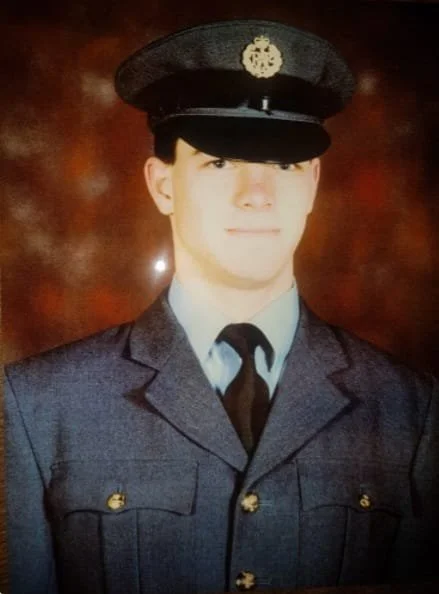
Raymond McCord, Killed by UVF on night of November 8th-9th, 1997, allegedly by the UVF. His body was found at 8.30 am on 9th. His father Raymond McCord Senior has been a leading campaigner for all Victims ever since.
One man's search for Robert Nairac is a lesson in doing the right thing
New film details a former republican prisoner's tireless efforts to find remains
SAM MCBRIDE, Sunday Independent and Sunday Life, November 9th, 2025
For decades, a former IRA man has undertaken a private search for the body of one of the Troubles' most mythical victims, Robert Nairac. Now in his 70s, last year this man told his story anonymously in a BBC podcast. Tomorrow night, he will reveal himself in a major new BBC film.
Former republican prisoner Martin McAllister's solitary mission to find Nairac's bones demonstrates how humanity can emerge from a time of squalid sectarian slaughter. Out of one of the darkest atrocities of the Troubles has come one of its most uplifting acts.
Lost Lives, the definitive record of all Troubles deaths, describes Nairac as "one of the most controversial and intriguing figures of the Troubles”. Noting multiple rumours he was involved in unlawful killings, it said such claims had been unproven; since then, judicial inspection of some of them has further undermined their credibility.
In The Disappearance of Captain Nairac by Bafta-winning director Alison Millar and journalist Darragh MacIntyre, the 28-year-old Grenadier Guardsman emerges as a swashbuckling figure steeped in the tales of empire and military heroism.
Former British army commander Patrick Mercer recalls him emerging from a cloud of dust when Mercer stepped off a helicopter at Bessbrook Mill. He was "like Lawrence of Arabia”, wearing a World War II jacket, armed with a Wingmaster shotgun, and sporting flowing hair and beard.
No ordinary soldier
Mercer recalled guarding Nairac outside a south Armagh pub where he could hear him singing Danny Boy. He was no ordinary soldier. Nairac would speak to locals in Irish and had an unusually deep knowledge of Irish history.
The young English Catholic officer was compellingly contradictory. His love not only of Ireland, but of IRA ballads, long predated joining the military. The author Luke Jennings, a friend from Nairac's time at the posh Ampleforth College, recalled that "at prep school, he had us singing Irish republican songs. He was a very complex character, imbued with almost medieval ideas of Catholicism and sacrifice and martyrdom and he certainly was full of the romance of republicanism in Ireland”.
On the night Nairac was abducted, he was singing rebel songs in a rural south Armagh pub. He had declined SAS cover for a meeting with someone who has never been publicly identified.
Officially, Nairac had a secretive role liaising between the RUC Special Branch and the SAS. But even that hid the truth. He was intelligence gathering himself, on both sides of the Border, and had an immense reputation within the army.
Nairac's extraordinary story is well known; but McAllister's is more quietly remarkable. He isn't doing this out of guilt at his own involvement in Nairac's disappearance, torture and murder. He was in jail at the time and so couldn't have played any part that dark night. Instead, his unlikely motivation stems from another British soldier.
When the south Armagh man joined the IRA, to him "it was romantic, it was chivalric, it was holy — you know, getting the British out of here”. By the mid-1970s, he was a hardened IRA man who by that stage had been in prison, had blasted his way out of prison, and was attacking British soldiers.
‘Chivalric’ medic
They fired back and he was left seriously wounded. He speaks with a rare and a raw honesty of that near-death experience. "I was prepared to accept the consequences. I'd no problem with them shooting me… that was fair enough; I was at war with them.”
He recalled getting "a kicking” after he pulled a pistol on the ground but a military medic stepped in, shouting at the swearing squaddies to leave him alone. He recalled: "A Royal Marine medic saved my life; this to me was chivalric.”
After being returned to jail, it was there that he heard of the IRA's Kingsmill Massacre in 1976. Appalled at the cold-blooded killing of innocent civilians — "a war crime of the worst sort” — he asked his IRA superiors for permission to write outside "to make clear that we weren't in jail for shooting Protestants”. He was denied permission, but wrote anyway, enraging the IRA.
He says he's a republican to this day, but became "totally disillusioned” with the IRA. Seeing something of Nairac's helplessness in his own helplessness as he lay on the cold Crossmaglen earth, McAllister's revulsion at the savagery of his murder and the disappearance of his body made him determined to try to find his remains.
He has spent almost three decades looking for Nairac. "It's been on my mind constantly because it's an open, running sore in this area. This man was a soldier and I was his enemy, but this man should be back with his family.”
Having spoken to a host of republicans over the years, he is convinced Nairac's body is "available” and was not disposed of in a meat plant, a grotesque rumour he says was totally false.
Talking to the Sunday Independent, McAllister speaks with the simple sincerity of a man who feels a burden of responsibility. When asked if he's concerned at how some republicans might react to his story, he says: "I couldn't care less.”
What does he hope the film achieves? "I hope it shows Robert Nairac as a normal human being. I honestly believe he was a very honourable person. It's very easy to blame somebody who's dead.”
Millions of words have been spoken and written about reconciliation on this island. Here a powerful post-death bond between two foes who never even met developed from a single moral act of one person. That medic's split-second decision to insist a prisoner was treated humanely transformed his enemy's worldview.
Naraic's and McAllister's lives overlap in surprising ways. Both were Catholic, both were passionate animal lovers, and both were in their own way rebels — Nairac within the hierarchical structures of the British army, McAllister within the no less rigid command chain of the IRA.
Any society needs rebels, even if we also need people who follow orders. And more than that, we need people who do the right thing, regardless of who's looking.
For good or ill, the consequences can last for generations.
'The Disappearance of Captain Nairac' will be shown tonight at the Cork International Film Festival and tomorrow night on BBC1 NI at 10.40pm
Belfast Council criticised over how request for Irish poppy tribute was handled
BRETT CAMPBELL, Sunday Life, November 9th, 2025
Belfast City Council has received a complaint over its handling of a request for the Lord Mayor to include a bilingual tribute when she lays a poppy wreath on Remembrance Sunday.
A local resident asked the DUP's Tracy Kelly to include a message in Irish when she honours those who made the ultimate sacrifice in the First and Second World Wars.
The sender referred to the thousands of Irish citizens who lost their lives in battle and pointed to Scotland and Wales, where Gaelic and Welsh-speaking soldiers are commemorated in their own language.
The member of the public was left “confused” when they received no acknowledgement or response.
politics
But replying to queries, the council confirmed it was in receipt of a request relating to a wreath “on Armistice Day”, which falls on November 11.
“As the Lord Mayor does not lay a wreath on Armistice Day, no further action has been taken in relation to this,” it added.
The person who submitted the request was angered by the “petty behaviour of the Lord Mayor's office” and accused officials of “putting politics before honour, respect and remembrance”.
It prompted them to alter the wording and resubmit the request on Wednesday, when this newspaper sought an updated response.
Belfast City Council subsequently confirmed receipt but said: “A response will be issued in due course, in keeping with our target of responding to enquiries concerning the Lord Mayor within five working days from their date of submission.”
However, five days would take the matter to Monday — beyond today's service.
The sender expressed dismay at what they described as “sleekit” behaviour.
“It's unbelievable,” they told this newspaper.
“I was led to believe that the Lord Mayor's office had to act on behalf on all the citizens.
“To not get back to me, and to play politics like this, is despicable.”
The individual has now lodged a formal complaint, expressing his “disgust with the Lord Mayor's office”.
“Irish-speaking soldiers won the Victoria Cross, which is the highest award there is,” they pointed out.
“Belfast owes a great debt of gratitude to these men... it would only be fitting to have the Irish language on the wreath.
“To date I have not received any response (to my query).”
The correspondence pleads with the council to urgently consider the request because “time is running out”.
“There is a vibrant Irish-speaking community in Belfast which is cross-community, and this fact should be respected,” it concludes.
Belfast City Council confirmed the complaint had been received by its chief executive's office.
The DUP was contacted for comment but did not respond.
King Charles 'weak for praying with pope'
ADRIAN RUTHERFORD, Sunday Life, November 11th, 2025
An Orange lodge has expressed “sad criticism” of the King's decision to pray with the Pope.
Lattery Purple Heroes in Markethill published the correspondence it sent to one of Charles's most senior officials.
The letter says some priests “absolved the sins” of republicans who killed members of the Orange institution.
It comes after Order leaders urged the King to “reflect on his coronation oath” in a letter.
Last month, Charles became the first reigning English monarch to pray publicly with a pope since Henry VIII.
This week, the Orange Standard, the institution's official publication, reported that “many members of the Orange family will have been disappointed” by the meeting and that the Grand Masters of Ireland, England and Scotland had written privately to the king.
embarrassed
Latterly Purple Heroes LOL 222 posted of a copy of its letter online. It says: “We cannot understand why His Majesty wishes to alienate further those still loyal to the Crown as he seeks to be a defender of all faiths and not promote the one true Faith.
“Jesus Christ is the Way, the Truth and the Light. A true defender of the Faith should not be embarrassed about saying that, a weak king might.
“We will pray that the King of Kings will not only continue to bless the monarchy but will particularly pray that God will indeed save the King, from himself.”
Buckingham Palace said at the time that the trip was intended to mark “a significant moment in relations” between both churches, recognise the ecumenical work they have undertaken and reflect the Jubilee year's theme of walking together as 'pilgrims of hope'.
Legacy of the Troubles deserves more candour
Financial Times, Letters, October 25th, 2025
Soldier F ruling turns spotlight on Troubles legacy, leans on an anonymous official’s briefing that the new Troubles Bill “should reduce the risk of veterans being dragged through the courts for years”. That is a reassuring line, but not an honest one. The bill may marginally reduce the likelihood of fresh criminal prosecutions that were always unlikely to reach conviction, because there never was any new evidence to justify new criminal proceedings.
But it does nothing to end the lawyers’ conveyor-belt of inquiries, inquests and civil actions. Those avenues — costly, prolonged and asymmetrical — will continue. Call it what it is: lawfare by other means.
More than 200,000 people have signed a Westminster e-petition (725716) — debated on July 14 — calling on the government to protect Northern Ireland veterans from prosecution.
Your report treats ‘truth and justice’ as the shared horizon. For too many campaigners targeting soldiers, police and security services, the real impulse is retribution and narrative control.
Sinn Féin and its fellow travellers are still working to recast the Provisional IRA as freedom fighters, rather than ruthless terrorists and organised criminals who inflicted decades of murder, torture and intimidation on the people of Northern Ireland. Any good faith reckoning must start there.
On Bloody Sunday specifically, your framing overlooks inconvenient testimony. Multiple civilian witnesses — including a wounded teenager — told various inquiries that a group of youths in the area were carrying nail bombs shortly before the shooting. Martin McGuinness, who later became Deputy First Minister of Northern Ireland, according to evidence from an IRA informer cited during the Bloody Sunday Tribunal (The Saville Inquiry), admitted he had a Thompson submachine gun on the day of Bloody Sunday. That context neither excuses unlawful killing nor dilutes the agony of the bereaved, but it does challenge the tidy morality play that is so often presented to the public.
Likewise, absent is any serious treatment of the climate of fear around witness co-operation. The IRA’s Derry Brigade did not merely exert ‘community pressure’, it ran a crude campaign to deter and silence prospective witnesses ahead of the Saville Inquiry. People understood that giving information about IRA activity could result in abduction and extrajudicial execution. The courage required to come forward in those circumstances is routinely ignored because it complicates the preferred script.
If your anonymous ‘senior official’ wishes to brief that veterans face less of coroner inquiries and prevent re-litigation by stealth. There are none. Instead, current proposals will go on feeding a system that grants disproportionate leverage to those most adept at weaponising [the] process, while the great majority of Troubles deaths — caused by paramilitaries — are airbrushed into the background.
A paper of record has a vital role in accurately representing all aspects of the issue. Reporting the grief and frustration of families who have waited for decades is important and deserves respect. At the same time, balanced coverage also requires candour about paramilitary culpability, witness intimidation and the way “legacy” has become an industry that keeps wounds open while rewriting history.
Ultimately, the impact of the evolving legacy framework in Northern Ireland does nothing to move peace forward -- quite the opposite.
Aldwin Wight, Welsh Guards, CO 22 SAS (Lt Col)
Richard Williams, Parachute Regiment, CO 22 SAS (Lt Col)
Nick Kitson, The Rifles, Sqn Cmdr 22 SAS (Maj)
Jamie Lowther-Pinkerton, Irish Guards, Sqn Cmdr 22 SAS (Maj)
David Maddan, Grenadier Guards, Sqn Cmdr 22 SAS (Maj)
Prof. Bob Parr, Royal Marines, wol 22 SAS
George Simm, Coldstream Guards, RSM22 SAS
Suspected New IRA moneyman's cover blown
UK TREASURY SANCTIONS BLOW MONEY-LENDER'S COVER ALLEGED DISSIDENT CHIEF WHO COULDN'T BE NAMED FOR LEGAL REASONS OUTED AFTER ASSETS ARE FROZEN
SUNDAY LIFE, November 9th, 2025
INVESTIGATIONS
A suspected New IRA loan shark has finally been hooked after being hit with a counter-terrorism assets freeze.
Sunday Life can reveal that Kieran 'Douse' Gallagher is believed to be the second-in-command of the dissident gang in Derry city.
The 49-year-old has also been named by multiple republican and security sources as a notorious money-lender whose high-interest loans have plunged vulnerable families into debt.
In some cases it is alleged people have been forced to store New IRA guns in return for having repayments cancelled.
Last Thursday cash-mad Gallagher, who recently returned from Spain — his fourth overseas holiday this year — was the target of an assets freeze by the UK Treasury.
In a statement the British government said it has “reasonable grounds” to suspect Gallagher is involved in terrorist activity linked to the New IRA.
He is also banned from being a company director, and is further accused of providing financial services, or making available funds for the purposes of terrorism, and being involved in terrorist activity by facilitating terrorism.
Gallagher's unmasking as a suspected New IRA financier has been welcomed in Derry, where he is hated for his loan shark activities.
Military
Locals say that despite being a “Johnny come-lately” — Gallagher only got involved with republicanism after the Troubles and has never seen any military action — he has been able to prosper because of his links to Thomas Ashe Mellon.
The pair are good friends and court papers relating to the 2019 New IRA murder of journalist Lyra McKee show how in the minutes after her death, the first person Mellon rang was Gallagher. After this the mobile phone was never used again.
At the time Mellon was the New IRA's Derry leader. He would later go on to become the organisation's overall chief-of-staff before resigning earlier this year amid internal rows over his opposition to a ceasefire.
According to sources Mellon — who recently came off a MI5 10-year terror watchlist — still wields considerable influence over the Derry New IRA, of which Kieran 'Douse' Gallagher is the suspected second-in-command to veteran dissident Fergal Melaugh.
Insiders claim that Gallagher, despite being a hated loan shark, has been kept on board because of the money he makes for the terror group.
Last Christmas a Sunday Life investigation into New IRA money-lending in Derry led to John 'Popa' Kelly being expelled from the group's political wing Saoradh.
This was after a prosecutor told a court: “Police believe he (Kelly) runs a money-lending scheme on their (New IRA's) behalf.”
Saoradh later said: “The individual named in recent media outlets who has been linked to money-lending schemes has been expelled from Saoradh.”
However, Popa Kelly is believed to have been merely a fall guy for Kieran 'Douse' Gallagher, who he was accused of working for by collecting money-lending debts.
The New IRA's failure to act against Gallagher at the time caused severe unrest within its Derry unit and led to convicted bomber Neil Hegarty quitting the gang.
Disgusted
The 60-year-old served a 10-year prison sentence after being caught with explosives in 2012. Sources say he was “disgusted” at how Gallagher was being looked after and resigned in protest.
There was also fury that the loan shark was allowed to act as a pallbearer at the funeral of New IRA member Kevin Hannaway, who died aged 77 in January.
When Gallagher, who is a taxi driver by trade, spotted photographers he desperately attempted to cover his face with one hand while carrying the Belfast republican's coffin with the other.
A subsequent internal New IRA investigation into his activities, carried out by dissidents from outside Derry, also linked him to unsanctioned building site extortion rackets.
In the summer of 2024 the foreman of a site in Derry complained that a low-ranking New IRA member had demanded protection money from him.
This individual was taken in for 'interrogation' by the group and he claimed to be acting under instruction from Douse Gallagher. He also handed over a mobile phone he said was given to him by the loan-shark for use in the extortion attempt.
But sources say the matter was “swept under the carpet” because of Gallagher's closeness to Thomas Mellon, and that if he was thrown out of the New IRA its criminal income would take a major hit.
There is also considerable anger in Derry over the treatment of local men Patrick Collett (57) and Martin Burke (61).
They were charged with possessing New IRA weapons after police stopped a car Collett was driving, after they watched him leaving Burke's home, during a planned search in May 2024.
Both men, who are not members of the terror gang, say they were pressured into keeping the gun by dissidents. They are both understood to have been in debt to the New IRA.
A solicitor for Burke told a court: “He is a vulnerable alcoholic who also has health issues.
“He was drunk when he agreed to keep this in his home. He is a vulnerable and pathetic individual who did not know which way to turn.”
Collett's lawyer added that his client has “mental health issues” and had been forced into moving the weapon. A republican source told Sunday Life: “It's scandalous what has happened to these two fellas (Collett and Burke). They are telling the truth when they say they are vulnerable and were pressured into holding those weapons.”
Joke
Although suspected of being a senior member of the New IRA, the Creggan-based Douse Gallagher is considered a joke figure by other republicans.
In November 2023, he came off worse in a fist-fight on a bus travelling to watch Derry City in the Irish Cup final in Dublin.
Other supporters started singing 'loan shark' at him to the tune of children's song Baby Shark.
An embarrassed Gallagher challenged a younger man to a fight and according to onlookers, ended up being put on his backside with a punch to the jaw.
Last year the loan shark was given a three-month suspended jail sentence for assaulting police in Derry.
However, he does not have any terrorism-related convictions. Insiders say that aside from regular holidays to Santa Ponsa on the island of Majorca, Gallagher also likes to travel to race-tracks throughout Ireland to gamble on horses.
In a statement announcing the government's assets freeze on Gallagher, Lucy Rigby MP, Economic Secretary to the Treasury, revealed the sanctions were imposed to “protect national security”.
She said: “The designations announced today send a clear signal that the UK works proactively to stop terrorist financing and will take action against those who try to exploit the UK's financial system for this activity.”
Conservatives push back at nationalist demands that UK be neutral in Unity debate
One of the worst aspects of the Anglo Irish Agreement was that it led ultimately to the UK committing to ‘neutrality’ on Northern Ireland.
By Ben Lowry, Belfast Telegraph, November 8th, 2025
That 1985 agreement was a step towards the later Belfast Agreement, thirteen years later. Then, in 1998, the Irish made sure that it said that the sovereign power in Northern Ireland would implement “rigorous impartiality” in its governance of the province.
What this means in the event of a border poll is a matter of dispute. But unionists and Conservatives are pushing back against some of the uncertain past UK responses to Irish interpretations of the 1998 deal, particularly since Brexit (the Tory government did begin to try to reclaim the Belfast Agreement from endless Irish nationalist citing of it to push an internal UK border).
In a recent BBC interview, the Tory spokesman on Northern Ireland Alex Burghart, implied that the UK government would have have to stay neutral in the event of a border poll. It was a regrettable comment at a time when nationalism is getting ever more hypocritical and assertive.
Mr Burghart moved quickly to clarify his thinking, and did so on our pages. He wrote: “On reflection, I think it is clear that, in the event of a border poll in Northern Ireland, the UK government would have a duty to campaign for the Union and not remain neutral.”
Keir Starmer has been – you guessed it – weak on the matter. As leader of the opposition he told the BBC that he would campaign for NI to stay in the UK in the event of a border poll, dismaying pro nationalist voices.
Starmer rowed back
Perhaps they bent his ear, because last year he delighted such separatists by rowing back from his commitment. Asked about the role of the UK government in that scenario, he said: "This is provided for by the Good Friday Agreement. The framework is set out and I'm absolutely committed to the Good Friday Agreement … [I am committed] to that and to the approach and the role of the UK government in that as the honest broker."
Mr Burghart had made his initial comments in the BBC Borderlands podcast, appearing on which was a mistake I believe – as was the input of unionists including Mervyn Gibson, Ian Paisley Junior and Jamie Bryson in the series. It gave the BBC cover that its broadcast was an appropriate examination of the matter, when I believe it was accepting – perhaps even pushing – the premise of a pressing and urgent ‘conversation’ on the constitutional question. BBC Northern Ireland has played a central role in cementing that premise when in fact it there is no demand for the so-called conversation outside of nationalism. Last year’s general election confirmed the results of the 2022 Stormont and 2023 council elections, that the combined nationalist vote has not risen since 1998.
If no unionists had taken part in this ‘Borderline’ series, in the same way that nationalists would refuse to take part in any conversation about the prospects of a new, seductive-sounding post Brexit UK, then it would have had little credence. While the podcast has not adopted the phrase ‘New Ireland’, the supposedly new Ireland is as anglophobic as ever – perhaps worse, it has used the term ‘united Ireland’. Unionists should try to spurn such agreeable language, particularly the shorthand of ‘unity’, and talk instead of the shattering of the UK. This is hard because that alternative phrase is longer and clunkier.
Meanwhile, it is very good to see the former first minister of Northern Ireland, Baroness Foster, push back against another shibboleth, the idea that the UK has no “selfish or strategic interest” in NI. When this was first said by the then Northern Ireland secretary Peter Brooke in a speech in 1990, I was aged 18 and probably naively thought it was a good idea, to show British goodwill.
Now I think that it was typically British and foolish. As work by the think tank Policy Exchange and others have shown, the UK has a huge strategic interest in NI, particularly when an Ireland that has the audacity to sue it in Strasbourg (over its handling of the legacy of the Troubles) continues to freeload off the UK for defence.
It is time to challenge nationalist demands for neutrality. All unionists, even the most moderate, and some Tories are realising that being nice to Ireland is not working.
Republic of Ireland elects second hard-left president in a row.
Owen Polley, Belfast News Letter, November 8th, 2025
Michael D. Higgins, arguably the most controversial, anti-British head-of-state for some decades, is stepping down this coming week. Unfortunately, he will be replaced by Catherine Connolly, who is even more aggressive and is supported by Sinn Fein.
Nevertheless, Higgins will be remembered for politicising an office that was supposed to be ceremonial.
The divisive way he conducted himself gained plaudits from nationalists in Northern Ireland. An SDLP councillor from Newry, Mourne and Down council thanked the Republic’s president for his commitment to “equality, inclusion, human rights, and civic ethics, often speaking out on social justice and global solidarity”.
This list of left-wing buzzwords will have appealed to Higgins’ self-image. Many unionists, though, agreed instead with the DUP councillor, Henry Reilly, who described the southern president as, “a nasty, condescending little man”.
Infamously, in 2021 Higgins refused an invitation to a multi-denominational church service, organised to ‘reflect’ on Northern Ireland’s centenary year. It carefully avoided being cast as a celebration, in order not to offend Irish separatists. The guest-list featured prominent figures from the UK and the Republic, including both nations heads’ of state, reflecting this ‘all things to all people’ sensibility.
The event was, if anything, overly sensitive to nationalists’ anti-Northern Ireland views, but that was not enough for an unreformed republican like Higgins. He alleged that the title of the service ‘of reflection and hope’ marking “the centenaries of the partition of Ireland and the formation of Northern Ireland,” was a political statement. And he claimed he had the right, “to exercise discretion as to what I think is appropriate”.
For many unionists, the service should have done more to celebrate Northern Ireland’s achievements in industry, culture, sport and the military. Was it too much to ask that the majority, who are happy to call Northern Ireland home, could express their pride?
Apolegetics
For an ideologue like Higgins, no amount of apologetic language could overcome his hostility. He snubbed the service and in effect the Queen (she was ill and the lord lieutenant attended on her behalf) and other leaders including the UK prime minister.
Unionists were shocked by Higgins’ bitterness and rudeness. It seemed at odds with his claims to represent everyone on the island and promote the idea of an inclusive ‘new Ireland’. Tellingly, he received the strongest support for his stance from Sinn Fein. The party’s southern leader, Mary-Lou McDonald, defended Higgins on the basis that “the partition of Ireland was a catastrophe for our people and our country”.
What the southern head of state seemed to object to most strongly, though, was being referred to as the “President of the Republic of Ireland” as opposed to the “President of Ireland”. He later clarified that this perceived slight was not, as he had implied, on the official invitation. It was language used by DUP politicians and the organisers had treated Higgins with courtesy and formality. He did not respond in kind. But then the president’s softly spoken style, and his pretensions to being a poet, often disguised uncompromising views and disdain for political opponents.
Some parts of the national media were shocked when he accused British academics and journalists of historical ‘amnesia’, in a pompous column for The Guardian newspaper at the start of 2021. Higgins claimed that Irish citizens engaged in ‘ethical remembering’ of history, while British people failed to confront ‘uncomfortable aspects’ of their past.
This was an odd generalisation, given that it is increasingly difficult to persuade historians and commentators in the UK to defend their country’s history. On the day that the column was published, Churchill College at Cambridge University staged a discussion examining the ‘racial consequences’ of the war-time prime minister’s time in office. According to a panel, at the institution bearing his name, Churchill was a ‘white supremacist’, who led an empire that was ‘worse than the Nazis’.
From the National Trust to the Church of England, once proud pillars of the establishment have competed to purge themselves of symbols linked to ‘imperialism’. The idea that Britons were unwilling to confront their history was just another deliberate insult from Higgins. While he used coy language about commemoration, and tried to give the impression of a thoughtful critique, he was simply repeating Irish nationalist cliches that blame Britain for Ireland’s problems, past and present.
Since 2016 and the Brexit referendum, there has been a resurgence of anglophobia in the Republic. This was compounded by politicians like Leo Varadkar and Simon Coveney, who used increasingly confrontational language during negotiations between the EU and the UK. It was also reflected in the rehabilitation of the IRA in youth culture, with a surge in incidents of young people chanting ‘Ooh, Ahh, Up the ‘Ra’ in public.
Contempt for Unionist perspective
The president has contributed to this atmosphere, rather than challenging it. On the surface, The Guardian column was a plea to thoughtfully examine the events that led to the partition of Ireland 100 years ago. In fact, it showed ill-disguised contempt for unionists’ perspective on the formation of Northern Ireland. “Six of the nine counties remained in the United Kingdom,” Higgins wrote, “and the rest of the island opted for self-determination.”
Of course, unionists view the creation of Northern Ireland as their act of self-determination, while the formation of the Irish Free State is seen as a regrettable consequence of Irish separatism. While the parliament at Stormont was not an ideal outcome for pro-Union people, it was accepted as the best way to protect our British identity and affiliation to Westminster.
You would not expect Higgins to accept this interpretation. In an article that appealed for a more sensitive look at history, though, he could at least have shown some understanding that not everyone subscribes to the Irish nationalist version of the past.
Then again, for the southern president and many like him, reconciliation and remembering seem only to entail Britain repeatedly flagellating itself for its history, while Irish nationalists need show no contrition for their crimes and bad behaviour.
The myth that the British inflicted uniquely brutal oppression on Ireland has fed the Republic’s sanctimonious modern view of itself. This exaggerated sense of victimhood can be detected in Irish nationalism’s obsession with the Israeli-Palestinian conflict, which, in the aftermath of the October 7 atrocities, led Jerusalem to accuse Dublin of ‘extreme anti-Israel policies’. The president caused particular outrage when he used a Holocaust commemoration to lecture Israel on its conduct in Gaza.
The Israeli foreign minister, Gideon Saar, accused President Higgins of a ‘cheap, despicable provocation’. Many Irish Jews at the event were so outraged by the president’s attempts to draw parallels between the Holocaust and Israel’s war in Gaza, that they turned their backs on his speech, or left the building.
Like Israelis, many unionists will say, ‘good riddance’, as Higgins leaves Aras an Uachtarain (the president’s official residence in Dublin). He was almost dementedly left-wing. He was also desperate to appear high-minded and progressive, but remained mired in romantic nationalist myths and anti-British cliches.
These flaws, though, are by no means unique to Higgins. As if to underline this point, as the recent Irish election campaign intensified, one of the candidates to replace the president, Heather Humphreys, was castigated in southern newspapers for her family’s links to the Orange Order. She had already described herself as a convinced republican, who wanted the Republic to absorb Northern Ireland. Yet her Ulster Protestant background was still a source of embarrassment and abuse, in a country that pretends to be generous and inclusive.
Michael D Higgins may have aggravated and offended unionists, but he was a useful figure too. He reminded us that, for all the rhetoric about a ‘new Ireland’, the Republic is still steeped in anti-British, anti-unionist prejudices and he provided a one-man rebuttal to naive arguments that those attitudes have changed.
His successor, Catherine Connolly, looks even more likely to act as a warning against accepting nationalist arguments.