SAM MCBRIDE, NORTHERN IRELAND EDITOR, Belfast Telegraph, January 17th, 2026
DECIDING WHAT TO DO WITH BBC NI AND RTE MIGHT SEEM LIKE ONE OF THE EASIER AREAS TO RESOLVE IN A UNITED IRELAND. IN FACT, THE COMPLEXITY OF THIS ISSUE SPEAKS TO A QUESTION WITH FAR WIDER IMPLICATIONS COMMENT
More than half a century ago, the Rostrevor-born architect of the economic model which has shaped modern Ireland wrote a confidential note to the Taoiseach in which he set out a heterodox analysis of partition.
At a time when the Republic still paid lip-service to the irredentist republican view of the border and when its constitution laid formal claim to a territory most refused to even refer to as Northern Ireland, TK Whitaker delivered a very different view to Jack Lynch.
His six-page November 1968 memo is an example of the questioning analysis which goes on privately even within governments which robustly say very different things in public.
Everyone would be worse
Whitaker wrote that if partition was to suddenly end without a generous agreement from Britain to keep funding Northern Ireland for years into the future, “we in the South will be imposing on ourselves a formidable burden which many of our own citizens, however strong their desire for Irish unity, may find intolerable.
“We cannot lay certain social ills in the North at the door of partition without acknowledging (at least in private) that conditions for the Catholics in NI would be far worse if partition were abolished overnight. We could not for a long time offer more than partial compensation for the loss of the enormous UK grants and subsidies.”
At the time, the Westminster subsidy for Northern Ireland was about £90m (£1.4bn in today's money). Now the subsidy is more than six times that sum.
But while that enormous question around Irish unity has always received enormous debate, other elements of creating an all-island state have gone virtually unnoticed.
One such question is what would happen to public service broadcasting — mainly now delivered by the BBC and RTE — if the border was to be removed.
At first it might seem an esoteric and even unimportant question, yet it involves an issue which would directly impact almost the entire population of the island and whose resolution would have implications for the sort of state which might emerge.
This week a team of media academics from Ulster University and Dublin City University published a report which examines this question. They make clear that a united Ireland “is not a foregone conclusion”, being something which “could take place in the medium term, the long term, or indeed not at all”.
But if it did come about, what would happen to the radio we listen to, the television we watch, and increasingly the websites of these broadcasters which we visit?
Democracy and national culture
In the perceptive and thought-provoking paper from Drs Phil Ramsey Stephen Baker, Roddy Flynn and Dawn Wheatley, they argue that “democracy and national cultures are inconceivable without mass forms of communication, where educated citizens require media literacy to understand and scrutinise the news and information that circulates in the public sphere”.
They go on: “One topic for discussion that has animated debate around reunification relates to issues around what flag the state would have, and what anthem it would use.
“To this you can add the naming of almost every organisation, with many questions coming down to a core issue: would RoI institutions remain, with their NI counterparts grafted into them? Or would new institutions be built? This is central to the topic at hand.”
They say that public service broadcasting makes “a distinct and valuable contribution to society which sets public media apart from what is solely provided by the market”, something they say “is even more crucial in the eventuality a new country would be formed, which, with a contested past, may well be fragile in its early stages”.
The report sets out five options — retaining the status quo, subsummation of BBC NI into RTE, a new public service broadcaster, leaving public service broadcasting to the market, or some combination of all of those.
The status quo is highly unlikely after unity, they say, pointing out that the BBC model exists on the basis of licence fee payments and that currently these aren't levied anywhere outside the UK.
This is a different question to simply having access to the BBC, as many people in the Republic, the US and elsewhere around the world currently have.
But even if they pay for the privilege, this is a fundamentally different relationship with the BBC to that which Northern Ireland currently has. As a part of the UK, Northern Ireland is included in programming — and this extends far beyond news coverage — in a way which would not happen for other places.
Losing access to BBC
The academics don't believe that “it is likely that audiences in NI, as it stands today, would lose access to existing BBC Network provision — both on radio and television”. In other words, Northern Ireland would, they think, continue to get what many people in the Republic currently receive — access to the BBC as a foreign broadcaster, a bit like we can access CNN. That is almost certainly right, but it would almost certainly come with a price. Either individual consumers would have to pay to subscribe or the Irish Government would use public money to pay the BBC for access.
It would be difficult to restrict this access to what is now Northern Ireland, but rights issues in the digital age are increasingly complex (as demonstrated by the recent restriction on people in the Republic using BBC Sounds) and so it's hard to imagine the entirety of the BBC's content being made free across the entire island without substantial payments from someone.
The report comes down on side of creating a new public service broadcaster from the assets of RTE and BBC NI, similar to what the Scottish Broadcasting Service (SBS) proposed by the SNP before the Scottish independence referendum.
That was to “initially be founded on the staff and assets of BBC Scotland” and to have formed a joint-venture with the BBC, with the SBS working closely with the BBC and supplying it with similar levels of content.
Tax or Licence Fee?
The report accepts that the TV licence fee “is perhaps in terminal decline” and suggests adopting the Finnish model whereby its public service broadcaster is funded through taxation, with individuals paying 2.5% of their total earned income and capital income above €14,000, up to a maximum payment is €163 a year, while organisations with taxable incomes above €50,000 pay €140 plus a percentage based on their size up to a maximum of €3,000.
At present, the BBC in Northern Ireland (which is only part of what we get as users of the BBC) and RTE between them cost a combined £434m a year. The academics suggest this should be increased — which if it were to happen would mean yet another cost to Irish unity.
Beyond this, there is the deeper question of whether public service broadcasting will survive as we have known it for a century.
The BBC and RTE were founded on the basis that the government controlled the broadcast spectrum and so could set rules which allocating a frequency to a broadcaster.
Now, traditional TV and radio is dying at an astonishing speed. What has happened to newspapers over 20 years is happening to broadcasters far more rapidly.
Paying for everything
Audiences are increasingly watching or listening to programmes online, which puts these broadcasters in competition not only with global giants such as Netflix and Disney, but with thousands of other media organisations such as this newspaper.
This week, analysis by industry publication Deadline revealed that for the first time YouTube has overtaken all BBC TV put together on a key measurement of audience — an extraordinary moment of inflexion.
If people are listening to public service podcasts or watching sophisticated videos online — and on their smart televisions — what is radio, and what is TV?
Retaining a privileged position for public service broadcasting is harder in such a world.
If public service broadcasting either doesn't survive, or endures in a far weaker form akin to that in the US, it has implications for the ability of the state to subtly shape the culture and cohesiveness of a country. In the UK, for instance, the scale of the BBC is such that the death of the Queen was unmissable, with the national anthem and a solemn announcement of the monarch's demise interrupting everything from BBC One to Radio One.
Government should not dictate what stories are covered or how news is reported, but the culture a broadcaster engenders is also important to how a country sees itself.
It is ironic that many unionists are hostile to the BBC, while many in Sinn Féin view RTE as a key part of a hostile southern establishment.
Breaking the BBC connection
In fact, the loss of the BBC — were that loss to be complete — would be one of the most tangible elements of Britishness which many unionists would quickly miss. It has been at the heart of British society and culture for longer than any of those voting in a border poll will have been alive.
The academics accept that lots of public service journalism is done by private companies such as newspapers, but reject that as a model.
They set out six defining principles for public media: universality, independence, excellence, diversity, accountability and innovation.
Yet arguably many media organisations — this newspaper among them — meet those criteria. The academics cite the standards of the Trust Project, standards to which this newspaper voluntarily adheres.
Weak in the face of power
However, the ownership of private media companies can change, and what is happening in the US illustrates how some media owners can be weak in the face of power.
This is further complicated by the growth of individual journalists producing high quality public service journalism, distributed through services such as Substack. Should they receive a share of public funding?
It's hard to argue that they shouldn't when some of what the BBC now produces on its website is publicly funded yet is demonstrably not public service journalism but material which any popular newspaper might produce.
The academics note that culturally, Britain and Ireland are very similar in this area. There wouldn't be the radically divergent attitudes to journalism which existed in east and west Germany.
Instead, they highlight that “on the island of Ireland three significant key commonalities should be first noted which suggest that (in theory) a unified journalistic approach is a realistic target: a strong culture of public service media and the associated journalistic outputs; a familiarity with established regulatory norms and standards among commercial and public service media; and common values among journalists.”
As with so many other elements of the unity debate, those of an optimistic or revolutionary disposition are likely to see in this question the possibility for a rare moment of transformative change for the better. There are flaws in both the BBC and RTE which are difficult to resolve without such a moment of crisis where change is forced upon what are unwieldy quasi-public sector organisations.
Difficult conversations
Unionists, on the other hand, are understandably fed-up hearing discussion of Irish unity. They don't want it, they're not interested in it, and they just want the whole idea to fade away.
This is wholly rational, just as nationalists aren't interested in considering how to strengthen the Union or environmentalists don't want to be involved in discussions about how to do more damage to the environment.
But the strength of unionist opposition to Irish unity means that many have missed how awkward such conversations can be for proponents of a united Ireland. Setting out the status quo is easy: it just means describing what is all around us.
The onus is on those arguing for drastic constitutional change to have prepared for it, yet this demonstrably hasn't been done. Sinn Féin's default response to questions about almost any of the details around the new state the party envisages is “we need to have the conversation”.
Even examining this one area — public service broadcasting — is a demonstration of how very difficult this enterprise would be. This is but one of thousands of decisions which would have to be taken if a genuinely new country was being created.
If it is worth doing, that is not a reason it can't be done. But considering what unity would actually mean, even at a high level, demonstrates to any reasonable person that the idea this could be done by 2030 — as Sinn Féin pretends — is fanciful.
Demands for such arbitrary dates without having even credible proposals for how it might work are profoundly unserious.
Unionist grassroots ‘crying out for realignment and change’
Philip Smith, Belfast News Letter, January 17th, 2026
On behalf of Uniting UK I have made the case for realignment within unionism in this newspaper on many occasions as it makes sense politically, organisationally and for improving the health of the Union.
While I knew this view had support within the wider unionist community, I didn’t realise that it was an almost universal perspective.
A decisive 92% of grassroots unionists favour political realignment within unionism, according to a major new survey commissioned by our Northern Ireland-based pro-Union campaign group, Uniting UK.
The poll of 1,070 grassroots unionists, conducted by independent Great Britain-based researchers, reveals a clear mandate for change. Those who took part were representative of the wider unionist community and included voters of all three main unionist parties and we thank all those who contributed.
Realignment has become the new term favoured by unionist leaders to refer to any unionist unity that improves electoral performance. At the last DUP conference, Gavin Robinson said in his leader’s speech, “when unionism is divided, our opponents prosper”.
The outgoing UUP leader Mike Nesbitt has talked a lot about realignment within unionism, about a move towards creating a two-bloc approach, with one wing more traditional and the other more progressive. However, once unionism starts engaging on specifics around realignment then the wheels fall off. As Mike Nesbitt said ahead of his last party conference, “I could see the merits of that kind of realignment, but I don’t think it’s going to come. I think there’s a lot of self-interest within the various parties.”
The lack of willingness to put aside relatively minor differences between parties for the greater good of the Union and unionism has led to frustration and the demand for change which is highlighted within this survey. The results are clear:
• 92% are concerned about the health of political unionism including 52% who say it needs major surgery
• 60% think this poor state is due to unionism having too many parties, with a further 32% having concerns
• only 6% think the current three-party approach works well
• 76% think that the biggest barrier to improvement is the lack of appeal of unionist parties themselves
• support for realignment is universal: 98% of DUP voters, 92% of UUP voters, 90% of TUV voters
Survey responses
Survey respondents are a cross-section of the wider unionist community: 28% are members of a political party, 36% are members of the loyal orders, 14% are in a marching band, and the largest group of 38% are not members of any organisation. The survey included voters of the DUP, UUP and TUV and covered all demographics.
These are remarkable figures which show a unionist grassroots crying out for change. They are giving a mandate to unionist leaders to take bold, strategic action to revolutionise how unionism is organised and portrays itself. The survey also shows that this change needs to be rooted in positivity to grow the unionist vote and deliver real outputs for the people of NI. If unionism is ever to retake the first minister post, win back largest designation status in the assembly and grow its Westminster representation then transformation is essential.
When asked why they supported realignment, the most popular reason (41%) was to change the ‘vibes’ around unionism to create new energy, confidence and enthusiasm. A further 27% say it would produce a party more capable of competing against Sinn Fein and 22% thought it would deliver more unionist seats.
When asked, what should be the main goal of that change respondents prioritised promoting the Union to those who currently don’t vote unionist. This was followed by raising the spirits of the unionist community to create confidence and thirdly to focus on improving life for ordinary people.
Finally, when asked how unionism should realign, 49% preferred a single unionist party, closely followed by 43% who favour a DUP/UUP merger. With only 8% wanting to keep the political status quo, grassroots unionists are clear that the three-party model is no longer viable; unionism must become fit for the future.
Majority want change
This super majority for change should be a wake-up call for political unionism. The unionist grassroots demand action from the three main parties to realign for the greater good. How that process will develop is up to the leadership of the political parties but any realignment must make unionism more attractive, grow the vote and instil confidence within the unionist community. The survey results show that unionists want to see outreach, a more positive unionism and one that delivers better government for the people of Northern Ireland.
Unionist leaders have long preached realignment from conference stages, but their words rarely align with practical action. This data amplifies the voice of grassroots unionism who are united in saying that it is time for change. Unionist leaders can now confidently act in the knowledge that they have a clear mandate from their grassroots.
Political unionism needs to listen as the results of this survey are crystal clear. Unionist voters will not tolerate a status quo that is driven by self-interest and more of the same is not an option. We are less than 18 months from the next election and this is evidence that unionists want to see action that is for the greater good. At a minimum, the three parties must immediately agree to promote inter-unionist vote transfers to maximise the number of unionist seats and launch a joint ‘get out the vote’ campaign.
Uniting UK calls on political unionism to come together with other pro-Union organisations, develop a plan of action, and create the change that grassroots unionists demand. A commitment is needed from all parties to begin a political transformation capable of securing our place within the Union for generations to come. This survey shows that the unionist people are ready to play their part.
Can their leaders take the action and decisions needed to drive the change they demand?
• Philip Smith is an Ulster Unionist councillor in North Down & Ards and a former MLA
Daughter of UVF victim ‘floored’ after Kenova forced to halt family briefings
CONNLA YOUNG CRIME and SECURITY CORRESPONDENT, Irish News, January 17th, 2026
THE daughter of a UVF murder victim has been left “floored” after Operation Denton halted individual family briefings linked to a loyalist murder gang due to a recent legal challenge.
Denise Mullen spoke of her shock and distress after officials from the Kenova investigation team contacted her this week.
Her father, SDLP member Denis Mullen, was shot dead at the family home near Moy, Co Tyrone, in September 1975.
He was killed by the Mid Ulster UVF, which included members of the RUC and UDR, and was linked to the ruthless murder squad known as the Glenanne Gang.
Kenova officials have carried out a review of the Mid Ulster UVF as part of Operation Denton over recent years.
Final Denton Report put on hold
The final Operation Denton report, which runs to more than 400 pages, was due to be published before Christmas but was put on hold after the family of a loyalist believed to have been involved in the Dublin and Monaghan bombings launched legal action.
A summary of the review, which includes a section on the 1974 bomb attacks, was published in December.
William Marchant, who was killed by the IRA in 1987, and former east Antrim UVF commander Billy Mitchell, who died in 2006, have been linked to the murders of 33 people in Dublin and Monaghan.
Lawyers representing William Marchant’s family are seeking an order to quash any part of the Denton report naming their father or making adverse findings against him.
Ms Mullen’s daughter was due to meet Denton officials next week and had hoped that finally, after half a century, she would be given the background to her father’s death.
“They can’t meet me or other families individually now because it all has to go through the courts,” she said.
“Once again, I as a victim, have been persecuted by the state, more hold-ups, more delays.
“I’m absolutely floored, how much more do they expect us to take?”
Gavin Booth, of Phoenix Law, said: “For the last 50 years Denise and her family have campaigned for the truth into what happened to her father. Today represents another blow in that quest.
“She was very hopeful that they would finally give her the truth that she has been searching for.
“We will face down any attempt… to suppress the truth into what happened to Denise and all the victims.
“It is our view that this report should be released and released immediately.”
A spokesman for Operation Kenova said: “We have temporarily paused our individual briefings with families affected by Operation Den-ton while the legal challenge is resolved.
“We fully appreciate and share the disappointment and frustration that this will cause.
“Te families involved have been updated and we remain committed to rearranging the briefings as soon as possible.”
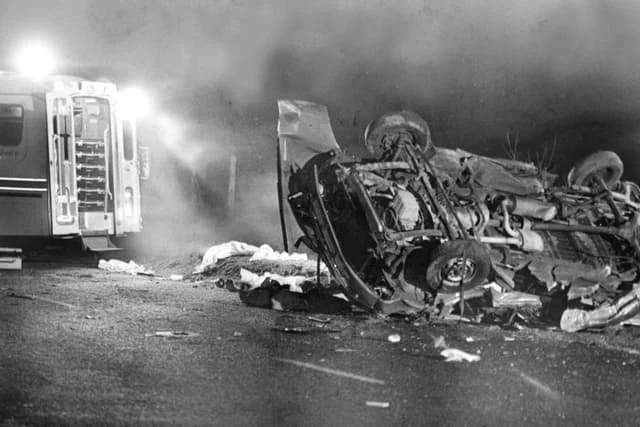
Eight building operatives killed and six seriously injured for working on British Army base
Teebane PIRA bombing: Campaigner calls for 'end to manipulation of truth'
Ahead of the anniversary of the Teebane massacre, tomorrow, a victims campaigner has called out what sees as "manipulation" of the truth around atrocities in the media and public discourse.
By Philip Bradfield, Belfast News Letter, January 17th, 2026
Kenny Donaldson of victims group SEFF says it has become normal for republican murders to be "part justified" with "contextualisation" of other events - which he says is not done for other atrocities.
He was speaking ahead of the anniversary of the Teebane Massacre by the IRA, when the terror group killed eight Protestant workmen and injured six more at Teebane with a 500lb roadside bomb on January 17, 1992.
Mr Donaldson notes that the UFF used Teebane to justify murdering five people at Sean Graham's Bookmakers on the Ormeau Road in Belfast just over two weeks later - but says this "context" is never mentioned in public discourse.
The Teebane commemoration on Sunday will hear the names of all eight murdered men read aloud at the site of their murder. They were David Samuel Harkness, William Gary A Bleeks, John Robert Dunseith, John Richard McConnell, Cecil James Caldwell, Nigel William J McKee, Robert Irons and Oswald Wilson Gilchrist.
‘Contextualising’ death and injury
By contrast, he says it has become normal to "contextualise" IRA attacks such as the Kingsmills Massacre, in which the IRA killed ten Protestant workmen in south Armagh.
"The preceding murders of the Reaveys and O’Dowds are now regularly referenced to 'contextualise' or even in some sense part-justify Kingsmills in the general public narrative - that it was inevitable, that there was 'no alternative',” he said.
“This doesn’t appear so for other atrocities. What media coverage or public discourse ever 'contextualises' Bloody Sunday through the prism of two RUC GC police officers being murdered in the city three days earlier or the most senior army officer up to that point dying on the morning of Bloody Sunday, having been shot in Londonderry four months earlier?
The two RUC officers, Peter Gilgunn and David Montgomery, were ambushed on Creggan Hill - close to the scene of Bloody Sunday three days later.
On the day of Bloody Sunday, Major Robin Nigel Alers-Hankey of the Royal Green Jackets died from IRA gunshot injuries sustained in the city centre while trying to protect firemen from stone throwers.
He died four months after being shot - the same day 13 people were killed when members of the Parachute Regiment opened fire on crowds following a civil rights demonstration in the city.
Mr Donaldson said the shooting of the RUC and army officers "are not justification or the cause for what happened on that day - but they are nevertheless heinous acts of terrorism which should be covered and condemned by all".
Similar cases
Two similar cases, he said, are the eight murders at Teebane and the murders of five Catholic civilians at the Ormeau Road bookmakers a little over two weeks later - which he noted the UFF claimed was retaliation for Teebane. But when has the media and wider public discourse ever mentioned this self-serving justification by the UFF for the Ormeau Road murders? It hasn’t - and rightly so."
He added: “It is high time that people started behaving honourably around all of these issues - and stopped the manipulation of the truth."
The eight men who died at Teebane were David Samuel Harkness, William Gary A Bleeks, John Robert Dunseith, John Richard McConnell, Cecil James Caldwell, Nigel William J McKee, Robert Irons and Oswald Wilson Gilchrist.
In response, Daniel Holder of the Committee for the Administration of Justice said that he personally rejects the legitimacy of tit-for-tat “framing” on Troubles murders.
"There was a particular framing at various times of the conflict that killings were ‘tit for tat’, this was quite often a false framing, and regardless more murders can of course never be justified by the suggestion they are in retaliation for others,” he said.
“Any suggestion that Army massacres such as Bloody Sunday were in retaliation or to be contextualised by past IRA attacks would imply an equivalence between the Army and paramilitary groups.
"It would imply that security force killings were not in legitimate self defence in the face of gunfire or the real imminent danger of it, but rather were unlawful retaliatory killings.”
The annual public Teebane commemoration them takes place at 3pm on Sunday at Teebane crossroads on the Cookstown to Omagh Road.
PIRA leader Gerry Kelly’s Garda file restored to archives
MARK HENNESSY, Ireland and Britain Editor, Irish Times, January 17th, 2026
The Department of Foreign Affairs has returned a file to the National Archives that included a letter from a senior Garda describing leading Sinn Féin figure Gerry Kelly as a senior IRA leader in 1996.However, assertions by Minister for Foreign Affairs Helen McEntee, that the withdrawal was “normal”, have been sharply rejected by history professor Diarmaid Ferriter.
The withdrawal of the file by the department was reported by The Irish Times last Saturday, three days after it was withdrawn. It prompted concern from historians that records relating to the Troubles were being interfered with.
The file included a letter that was written in May 1996, by Noel Conroy, then serving as a Garda assistant commissioner in charge of crime and security. Mr Conroy went on to serve as Garda commissioner between 2003 and 2007.
In the 1996 letter, he wrote that the IRA’s strategy was dominated and controlled by five men: Gerry Kelly, Brian Keenan in Belfast, Martin McGuinness in Derry; Pat Doherty in Donegal and Thomas “Slab” Murphy in Louth. Mr Kelly is now an MLA for North Belfast.
“Gerry Kelly is emerging as the most dominant figure within this group,” wrote Conroy in a two-page letter on the IRA’s activities to the then-secretary general of the Department of Justice, Tim Dalton. The inclusion of Mr Conroy’s letter in the files led to post-Christmas contacts between the Department of Foreign Affairs and the Department of Justice amid initial confusion about which department had released it.
In a Dáil parliamentary reply on Thursday to Labour TD Ged Nash, Ms McEntee said the file had been withdrawn temporarily and had now been returned.
She said her department had released 800 Northern Ireland files.
“It is normal for files to be recalled on a temporary basis, for review or consultation by officials,” she said. “Following the temporary recall, the files are returned to the National Archives. That is what was done in this instance. The file in question was recalled for review and will be returned this week.”
Rejecting the Minister’s assertion, Prof Ferriter said he could not remember another case of a previously-released file being withdrawn.
“That is a very unsatisfactory explanation,” he said, adding that the Government has let a National Archives supervisory council lapse for several years, meaning “there isn’t even a forum to raise these matters”.
Prof Ferriter said the State is not releasing even a fraction of the files that should be released annually.
3 unionist parties ‘no longer viable' says survey
By Adam Kula, Belfast News Letter, November 17th, 2026
A survey of unionists has found that an overwhelming majority of respondents want to see pro-union parties merge together.
Ulster Unionist former MLA Philip Smith - whose organisation, Uniting UK, commissioned the survey - said that 92% of respondents favoured that outcome.
As to what shape such an amalgamation may take, 49% had said they would prefer a merger of the TUV, DUP, and UUP, whilst 43% favoured a DUP/UUP merger.
"With only 8% wanting to keep the political status quo, grassroots unionists are clear that the three-party model is no longer viable," writes councillor Smith in today's News Letter (click here to read his essay).
Meanwhile, in a message being issued today to DUP members, party leader Gavin Robinson has stressed the importance of "working together to promote the Union" (his message does not contain any reference to "merger").
"I stand ready to act in the widest interests of the pro-Union cause and to work across the unionist spectrum," said Mr Robinson.
"I have written to the incoming leader of the Ulster Unionist Party setting out our position and inviting him to meet.
"I look forward to working with Jon Burrows to see how our parties could co-operate and work towards building greater support for the Union and to test how we might best strengthen pro-Union co-operation leading to the election of more pro-Union members at local government, Assembly and Westminster elections.
"I have previously met with Jim Allister and he knows we stand ready to co-operate to maximise unionist representation.
No room for complacency
"Unionism has no room to be complacent and while the DUP is working and planning for the future, I want to ensure in that planning process all unionist parties and grassroots groupings are involved."
Meanwhile the soon-to-be leader of the UUP Mr Burrows issued his own message yesterday - his first substantial one since he emerged as the sole candidate to take over from Mike Nesbitt.
He said: “To be the candidate for leadership fills me with immense pride and renewed energy.
"The people of Northern Ireland deserve a strong, confident, and pragmatic Ulster Unionist Party, one that delivers for them, addresses the current challenges in Northern Ireland with honesty, and strengthens the Union in the long term."
Mr Robinson’s message to the DUP base also says: “As leader of the largest Unionist party, I am determined to make every effort to ensure that Unionism does not squander the narrow window of opportunity that exists to prepare for the future and build, in partnership across Unionism, a movement that is connected, re-invigorated and representative of our pro-Union communities.
"I support, and want to reflect the desire across the grassroots of Unionism, to see unionist representatives and their political parties working together to promote the Union, to stand upfor all those who want to get on with their lives and who want to see our country prosper.
"Unionism’s collective voice and clout will be stronger if we work together and our people can see a plan of action which they can help shape and then support.
"I have said it before and I will say it again; the truth is that if unionism has more seats, it will have more power to get things done.
"The opposite is also true, a divided and fractious unionism without co-operation will cost seats and our collective influence will diminish.”
He goes on to add: "I have previously met with Jim Allister and he knows we stand ready to co-operate to maximise unionist representation.
"Unionism has no room to be complacent and while the DUP is working and planning for the future, I want to ensure in that planning process all unionist parties and grassroots groupings are involved.”
In his piece for the News Letter today, councillor Smith (who was a Strangford MLA in 2016/17, and now sits on Ards and North Down Borough Council) said of his survey: "Unionist leaders have long preached realignment from conference stages, but their words rarely align with practical action.
"This data amplifies the voice of grassroots unionism who are united in saying that it is time for change.”
Uniting UK's online survey of 1,070 unionists was done in the autumn.
People were largely recruited to take part via social media, and councillor Smith said the polling work was done by two independent English companies, Lantern and Shore.
Burrows combative style brings fresh dynamic to intra-unionist rivalries
JOHN MANLEY, Irish News, January 17th, 2026
PLATFORM
WHEN the TUV missive was launched Jon Burrows had barely wiped the sleep from his eyes on his first day as the Official Unionists’ unofficial new leader.
Seemingly hell hath no fury like a politician spurned, and while the statement issued yesterday morning from the TUV press office included congratulations from Jim Allister for the former policeman’s successful, unchallenged bid for the UUP leadership, there was a sting in the tail, along with more than a hint that intra-unionist rivalries are hotting up.
Mr Burrows had addressed the TUV’s annual conference last April, and while he was there to talk about policing matters, there’s a strong likelihood that his hosts were hopeful of adding the polished media performer to its expanding team. The polls suggest the TUV has enough support to secure up to a handful of Assembly seats but suffers from a dearth of decent candidates.
Fast forward three months and the former PSNI chief inspector was unveiled as the Ulster Unionists’ newest MLA, taking over from Colin Crawford, the largely anonymous co-optee who replaced Robin Swann in North Antrim after he’d been elected to Westminster a year earlier.
Smelling a Lundy
Jim Allister can smell a Lundy from 500 yards and anything but the purest unionism will attract his ire.
In Mr Allister’s eyes, staying quiet on the Irish Sea border is as bad as the DUP spoofing that they’d removed it.
There was a definite whiff of sour grapes from the TUV statement but it also pointed to an intensification of unionist in-fighting. Under Mike Nesbitt, the UUP tended to be a bystander in the battles between the TUV and DUP. Mr Nesbitt and his party adopted a more pragmatic approach to the post-Brexit trading arrangements, rising above bickering between the two other unionist parties.
But Jon Burrows has brought a fresh dynamic to the intra-unionist contest. While he’ll dismiss the suggestion that his leadership will see the UUP shift right, there’s no doubt that his combative style will be welcomed by many TUV and DUP supporters.
However, the difficulty for the new Ulster Unionist leader’s approach is that his party may become indistinguishable from its larger rival, with style rather than substance often cited as the main difference between the two.
Meanwhile, Jim Allister has also identified a potential threat to his party’s ascendency and has gone into attack mode.
There’s much talk of unionists co-operating in the 2029 Westminster election but there’s a danger that rancorous campaigning for next year’s Stormont election will create lasting ill-feeling.
Sit back and enjoy the show.
Burrows hits back at TUV claims he ignores the Irish Sea border
JOHN MANLEY, Irish News, January 17th, 2026
ULSTER Unionist Party leader-elect Jon Burrows has hit back at claims from his TUV counterpart that he has never expressed an opinion on the Irish Sea border.
Mr Burrows was confirmed as the new UUP leader by default on Thursday when prospective challenger Robbie Butler said he would not be entering the contest to succeed Mike Nesbitt.
The North Antrim MLA, who has only been a party member since being co-opted into the Assembly last August, is the fifth Ulster Unionist leader in a row to assume the role uncontested.
In a statement issued yesterday, TUV leader Jim Allister congratulated Mr Burrows and said he looked forward to co-operating with him “when appropriate”.
However, the North Antrim MP said he was surprised someone could take on a leadership role within unionism “without ever having expressed an opinion, or taken a stand, on the biggest present day threat to the union, the protocol”.
“The protocol/Windsor Framework is dismantling our union and building by design the stepping stone of an all-Ireland economy,” Mr Allister said.
“Bad enough that one party of unionism has crippled its stand by lying over having removed the Irish Sea border, but to have another ignore it, is equally disappointing.”
The TUV leader urged Mr Burrows to “find his voice on this all-important issue”.
Living with Brexit
The newly-crowned UUP leader said his party’s position on the Windsor Framework had been “consistent” and that included advocating for its removal.
He echoed his colleagues Lord Empey and Steve Aiken’s assertion that the protocol “creates divergence and represents a long-term economic obstacle for Northern Ireland” when trading with what Mr Burrows described as “our largest and most important market”.
“However, the Windsor Framework is not going away, and unionism needs to avoid strategic errors that may lead to foreseeable and adverse consequences for our people,” he said.
“The Ulster Unionist Party were very clear about the risk of Brexit and the dangers of a trade border between Great Britain and Northern Ireland.
“Our job now is to ensure we are liaising closely with local businesses and are having robust and constructive engagement in Westminster to deal with the invidious Irish Sea border.”
Mr Burrows also reiterated his support for the power-sharing institutions, saying collapsing the devolved institutions would be a “significant and unnecessary victory to republicanism”.
“It is a strategic misstep, regardless of the wider debates within unionism,” he said.
“The Ulster Unionist Party will continue to take a responsible, realistic approach in defence of Northern Ireland’s place in the union, and this position will remain unchanged.”
Robinson urges more unionist co-operation from new leader
ADRIAN RUTHERFORD, Belfast Telegraph, January 17th, 2026
DUP leader Gavin Robinson wants an early meeting with Jon Burrows to discuss greater unionist co-operation.
In a challenge to the UUP's incoming leader, Mr Robinson warned that divisions and factions within unionism will cost seats.
He warned there was a “narrow window of opportunity” for unionism to build a “connected, re-invigorated” movement.
Northern Ireland is next due to go to the polls in the 2027 Assembly election.
In some seats, such as Lagan Valley at the last Westminster election, a split vote has seen a non-unionist candidate elected.
In Fermanagh-South Tyrone and North Down, the DUP stood aside at the same election in an attempt to return a pro-Union MP. Alex Easton was elected in North Down, unseating Alliance's Stephen Farry.
Mr Robinson has repeatedly made the case for greater unionist co-operation.
And in his weekly message to DUP members, seen by this newspaper, he urged the UUP's leader in waiting to work with him to maximise the unionist vote.
Narrow window of opportunity
He said: “2026 is an important year for unionism. As leader of the largest unionist party, I am determined to make every effort to ensure that unionism does not squander the narrow window of opportunity that exists to prepare for the future and build, in partnership across unionism, a movement that is connected, re-invigorated and representative of our pro-Union communities.
“I support, and want to reflect the desire across the grassroots of unionism, to see unionist representatives and their political parties working together to promote the Union, to stand up for all those who want to get on with their lives and who want to see our country prosper.”
While he does not specifically mention pacts, Mr Robinson said unionism's collective voice and clout will be stronger if it works together.
“I have said it before and I will say it again; the truth is that if unionism has more seats, it will have more power to get things done,” he added.
“The opposite is also true, a divided and fractious unionism without co-operation will cost seats and our collective influence will diminish.
“I stand ready to act in the widest interests of the pro-Union cause and to work across the unionist spectrum.
“I have written to the incoming leader of the Ulster Unionist Party, setting out our position and inviting him to meet.
“I look forward to working with Jon Burrows to see how our parties could co-operate and work towards building greater support for the Union and to test how we might best strengthen pro-Union co-operation, leading to the election of more pro-Union members at local government, Assembly and Westminster elections.
“I have previously met with Jim Allister and he knows we stand ready to co-operate to maximise unionist representation.
“Unionism has no room to be complacent and while the DUP is working and planning for the future, I want to ensure in that planning process all unionist parties and grassroots groupings are involved.
“It is the job of all of us to be building support for the Union and making the case for it. We must do that at home as well as nationally and internationally.”
Belfast journalist branded ‘left-wing hack’ in White House press secretary’s tirade
JOHN BRESLIN, Irish News, January 26th, 2026
NIALL Stanage, the Belfast-born target of a Karoline Leavitt tirade, was back doing his job shortly after his “exchange” with the White House press secretary on Thursday morning.
But the US-based commentator, a former Methodist College student originally from Carryduff, did not – could not – use any of Ms Leavitt’s reply to his question as he crafted a piece around President Donald Trump’s threat to invoke the Insurrection Act and further militarise the streets of Minneapolis, Minnesota. It was published yesterday morning.
He is remaining quiet on the briefing, during which he was accused of “bias” and being a “left-wing activist”.
The much-shared clip of Mr Stanage’s question and asked for opinion on the activities of the Immigration and Customs Enforcement (ICE) agency and the shooting death by an ICE agent of 37-year-old mother of three Renee Good, and Ms Leavitt’s thunderous response has prompted much support for the Irishman – but also abuse and calls for him to be deported.
Mehdi Raza Hasan, the prominent British-American broadcaster and journalist, declared “solidarity” and described the 52-year-old as “a great journalist asking important questions, something not enough people do” in the White House briefing room.
Belfast City Councillor Carl Whyte remembered when Mr Stanage, when editor of Magill magazine in Dublin, gave him a break by publishing an article.
A sound person
“Sound person and fearless here,” the SDLP representative said of the verbal confrontation.
Author Siobhan MacGowan, sister of the late Pogues singer Shane, added her support: “The most ethical journalist I have ever known. Thank you for speaking truth to power.”
But another poster described him as “a political activist masquerading as a journalist” and questioned why he was allowed in the White House press pool.
“Why is he allowed to stay here? ICE grab his Irish ass and return him to Belfast.”
To recap, Ms Leavitt, during the lengthy tirade, accused Mr Stanage of being “biased” and “pretending” to be a journalist and that he should be reporting the facts.
This was in response to an initial question around Homeland Security Secretary Kristi Noem’s assertion that ICE are “doing everything correctly”.
Mr Stanage noted that last year 32 people died in ICE custody and 170 US citizens were detained by the force before adding that Ms Good was “shot in the head and killed by an ICE agent”.
“How does that equate to them doing everything correctly?” he asked Ms Leavitt.
“Why was Renee Good unfortunately and tragically killed?” Ms Leavitt asked, prompting Mr Stanage to find out if she wanted his opinion. “Yeah,” she said.
“Because an ICE agent acted recklessly and killed her unjustifiably,” Mr Stanage replied.
‘A left wing hack’
She responded: “OK, so you’re a biased reporter with a left-wing opinion… Because you’re a left-wing hack. You’re not a reporter, you’re posing in this room as a journalist. And it’s so clear by the premise of your question. And you and the people of the media who have such biases but fake like you’re a journalist, you shouldn’t even be sitting in that seat.”
The verbal assault on the columnist, to which it was impossible to reply, is part of a pattern where the White House, from President Trump down, single out journalists for attack at press briefings and on social media, often branding them biased or left wing.
Many of those targeted are then subjected to more intense trolling by ardent supporters of the president, and even threats.
In the debate over the exchange, some argued Mr Stanage should not have taken Ms Leavitt’s bait and declined to give any opinion. But it will not be known whether that would have made a difference.
Ms Leavitt’s response included the other key element in how administration officials deal with questions, whether from journalists or from members of Congress, following attack, deflect and add further insult.
“Do you have the numbers, the facts, on how many American citizens have been killed at the hands of illegal aliens who ICE is trying to remove from this country,” she added.
“I bet you don’t. I bet you didn’t even read up on those stories.
“I bet you never even read about Laken Riley or Jocelyn Nungaray or all of the innocent Americans who were killed at the hand of illegal aliens in this country and the brave men and women of ICE are doing everything in their power to remove those heinous individuals and make our communities safer.
“And shame on people like you in the media who have a crooked view and have a biased view and pretend like you’re a real, honest journalist.”
Mr Stanage has worked in the US for more than 20 years, for the last near decade as a columnist and commentator for The Hill, a respected Washington online publication. More recently he has co-hosted one of its podcasts, Rising.
Different media
He has appeared across different media in the US, including on CNN and other major broadcasters, commentating on US politics. He has also provided commentary and analysis to Irish broadcasters. In short, he is paid to provide analysis, sometimes drifting into opinion.
His piece published on yesterday morning was a reasoned analysis of Mr Trump’s threat to invoke the Insurrection Act and even included a quote from Ms Leavitt’s Thursday briefing in which she described as “shameful” the actions of Democratic governors and mayors who fail to co-operate with federal law enforcement.
In the years since arriving in the US in 2003, he has covered politics for the Sunday Business Post and contributed to a range of publications, including Salon, The Wall Street Journal, The Guardian and the Irish Independent,
He has covered six presidential elections and wrote a book on Barack Obama’s first successful campaign in 2008, Redemption Song: An Irish Reporter Inside the Obama Campaign.
Prior to moving to the US, he wrote for various publications in Dublin and London. He was one of the editors of Magill after its 1997 revival.
In his early years, after graduating from St Edmund Hall, Oxford, in 1995 he reported for The Irish News.
There is no publicly available information of involvement in left-wing activism.
Trump’s US manufacturing boom has been a bust so far
DAVID J. LYNCH, Irish News, January 17th, 2026
INTRODUCING the highest US tariffs since the Great Depression, President Donald Trump made a clear promise in the spring: “Jobs and factories will come roaring back into our country.” They haven’t. Manufacturing employment has declined every month since Trump declared “Liberation Day” in April, saying his widespread tariffs would begin to rebalance global trade in favour of American workers. US factories employ 12.7 million people today, 72,000 fewer than when Trump made his Rose Garden announcement.
The trade measures that the president said would spur manufacturing have instead hampered it, according to most mainstream economists. That’s because roughly half of US imports are “intermediate” goods that American companies use to make finished products, like aluminium that is shaped into soup cans or circuit boards that are inserted into computers.
So while tariffs have protected American manufacturers such as steel mills from foreign competition, they have raised costs for many others. Auto and auto parts employment, for example, has dipped by about 20,000 jobs since April.
“2025 should have been a good year for manufacturing employment, and that didn’t happen. I think you really have to indict tariffs for that,” said economist Michael Hicks, director of the Center for Business and Economic Research at Ball State University in Muncie, Indiana.
Small and midsize businesses have found Trump’s on-again, off-again tariffs especially vexing. Fifty-seven percent of midsize manufacturers and 40 percent of small producers said, in a November survey by the Federal Reserve Bank of Richmond, that they had no certainty about their input costs. Only 23 percent of large manufacturers shared that complaint.
Smaller companies were also more than twice as likely to respond to tariffs by delaying investments in new plants and equipment, the survey found. One reason could be that taxes on imports raise the price of goods used in production much more than they do for typical consumer items, according to a study by the San Francisco Fed.
Industries producing more technologically complex goods such as aircraft and semiconductors, are also paying an outsize price, according to Gary Winslett, director of the international politics and economics program at Middlebury College. Makers of semiconductors, for example, shed more than 13,000 jobs since April.
“They’re the ones who need the imported inputs. Really advanced manufacturing is actually what’s getting hit the hardest,” Winslett said.
Trump’s tariffs, however, are not the industrial sector’s only headache. Factory payrolls began their post-pandemic decline in early 2023, almost two years before Trump returned to the White House.
High interest rates and a shift in consumer spending patterns are hurting the nation’s manufacturers, economists said. Business loans are more than twice as expensive as they were four years ago, with banks charging their most creditworthy borrowers interest rates of 6.75 per-cent. That discourages businesses from expanding operations and hiring additional workers.
After bingeing during the height of the pandemic on durable goods, consumers have redirected their spending to in-person services. Money that once went to makers of furniture, televisions and exercise machines now goes instead to restaurants and entertainment venues.
In Indiana, the spending switch can be glimpsed in the fortunes of the recreational vehicle industry, a local mainstay. RV shipments soared to more than 600,000, a record, in 2021 as consumers trapped at home by the pandemic hit the road. But by 2024, the work-from-home era was over, and sales fell by nearly half. Thor Industries, the largest RV manufacturer, laid off several hundred workers last year as demand flagged.
Once Trump returned to the White House, manufacturers responded by over-ordering imports to beat the anticipated tariffs. That has left many producers with more inventory than they need, suggesting that cuts lie ahead, according to Ball State’s Hicks.
“The manufacturing job losses that we see now are really just the beginning of what will be a pretty grim couple of quarters as manufacturing adjusts to a new lower level of demand,” he said.
Modest numbers of manufacturing jobs have been trimmed throughout the economy. In December, Westlake Corp., a Houston-based producer of industrial chemicals, said it would idle four production lines at facilities in Louisiana and Mississippi, putting 295 employees out of work. Speaking on an investor call, company executives blamed excess global capacity and weak demand for the move.
While the jobs that Trump promised have not materialised, factory output rose in 2025, reaching its highest mark in almost three years, according to Federal Reserve data, and administration officials say it is only a matter of time before the full benefits of the president’s plan are felt.
Trump’s tariffs and jawboning encourage CEOs to invest in new US plants, officials say. Provisions in the president’s signature fiscal legislation permitting companies to quickly write off the full expense of new investments in equipment, as well as research and development expenses, will spur modern manufacturing, they have said.
“It also encourages the buildout of high-precision manufacturing here at home, which will lead to high-paying construction and factory jobs,” Treasury Secretary Scott Bessent said in a speech this month.
Companies are spending more than three times as much on constructing new factories as they did when Trump was first inaugurated, though less than during the Biden-era peak. The White House last fall hailed recent investment announcements by companies such as Stellantis and Whirlpool. Last month, T. RAD North America, a subsidiary of a Japanese manufacturer, announced plans for a new auto parts plant in Clarksville, Tennessee, which would employ 928 workers.
Nick Lacovella, a spokesman for the Coalition for a Prosperous America, which backs Trump’s manufacturing policies, said the roughly 1 percent shrinkage in factory employment last year was less significant than the uptick in business investment.
“We saw a significant increase in capital expenditures, which is the earliest signal that reindustrialisation is taking hold. Those investments take time to permit, build and staff before they show up in employment data,” he said.
The president’s hopes of increasing manufacturing employment defy decades of experience in the United States and other advanced economies. American factory jobs peaked at 19.5 million in the summer of 1979 and have been sliding ever since, largely because of the introduction of machinery that can do the job of several workers.
As two presidents sought to revive domestic production over the past decade, manufacturing employment rode a roller coaster. Factory jobs increased by 421,000 during Trump’s first term before sinking by more than 1 million during the pandemic. President Joe Biden used government subsidies to encourage hiring, especially for green-energy projects, and manufacturing payrolls rose more than 100,000 above Trump’s highest mark.
But those gains evaporated by the end of 2024.
On Tuesday, the president addressed the Detroit Economic Club, touting “the strongest and fastest economic turnaround in our country’s history.” He boasted about growth, productivity, investment, incomes, inflation and the stock market.
“The Trump economic boom is officially begun,” the president said.
All that’s missing now are the jobs.
– Washington Post
Belfast plans for St Patrick’s Day revealed
MICHAEL KENWOOD, Irish News, January 17th, 2026
BELFAST City Council has revealed some of the programming and planning for the St Patrick’s Day 2026 festivities in the city.
A document forwarded to the council’s January City Growth and Regeneration Committee was published this week, giving agreements and plans with regards to the delivery of St Patrick’s celebrations.
The budget for events, £300,000, is currently the same as last year. The council will continue contracts with Luxe, Circusful, Beam Creative, Tradfest and Féile an Phobail.
St Patrick’s Music Festival will take place from March 13 to 17 as part of Belfast UNESCO City of Music’s St Patrick’s Day celebrations.
In the lead-up to St Patrick’s Day and the day itself, a series of activities will be delivered across the city by the council and its partner/ curators.
TradTrail, by Féile an Phobail, will feature performances from the best local and national traditional musicians, offering free music performances in bars, restaurants, hotels and visitor attractions across the city from early March.
The council document states: “At the heart of the programme is a diverse, crosscultural and cross-traditions celebration in honour of St Patrick.
“From headline concerts and relaxed workshops, the fun and grace of set and céilí dancing, reflective pilgrimages, and free St Patrick’s Day Festival Village at Cathedral Quarter, everyone is invited to the city to enjoy a variety of indoor and outdoor traditional arts events.
Pipe Band Extravaganza
“Sunday March 15 will see the Pipe Band Extravaganza take place in the grounds of City Hall from 12pm to 2pm. A stellar line-up of musicians are confirmed on the bill including the legendary voice behind the timeless anthem ‘Caledonia’, Dougie MacLean, and Belfast harper Ursula Burns.
“RTÉ Radio 1 Folk Singer of the Year 2022 Muireann Nic Amhlaoibh and her band will appear, as well as Planxty’s Andy Irvine, the experimental smallpiper Brìghde Chaimbeul, celebrated harper Michael Rooney, sean nós dancer Becky Ní Éallaithe, uilleann piper Mick O’Brien, and many more.
“Writers Square will host Tradfest’s Main Stage Area, Belfast Cathedral Car Park will house the Food Village, while Saint Anne’s Square will provide the Acoustic Stage and The MAC Indoor Céilí sessions.”
It adds: “The St. Patrick’s Day Parade will be held on Tuesday, March 17, 2026. Starting at Belfast City Hall, it will provide an accessible family-friendly experience of cultural celebration.
‘‘The large-scale parade will be curated and delivered by the council events team with animation and participation from professional, voluntary and community organisations.
“Participants from a range of backgrounds and from the north, south, east and west of the city will come together to join the procession of floats to champion inclusion and diversity within the city.”
Seachtain na Gaeilge, the biggest Irish language festival in the world, will be presented in Belfast by Conradh na Gaeilge, and will take place from March 1 to 17.
The council states: “(its) aim is to amplify and to broaden participation through accessible family-friendly and community-centred events, all of which aim to raise awareness of the Irish language.
‘‘It will feature a headline event, the Irish Cultural and Family Celebration Day “Spraoi Cois Lao” or “Footprint fun” at Custom House Square on Saturday, March 7 from 1pm to 4pm.
Omagh priest ‘offered strength and support in difficult times’
FR EUGENE HASSON, Irish News, January 17th, 2026
FATHER Eugene Hasson has been remembered for his love of the people of Tyrone, including his role as chaplain at Omagh’s hospital when the 1998 bomb devastated the town.
His funeral at Sacred Heart Church in Omagh yesterday heard how he had sought to promote peace, justice and reconciliation during tumultuous times, as well being a dedicated pastor to all his parishioners.
Lifelong friend Fr John Phair told mourners how he had buried his mother in Dungiven, Co Derry just two days before the Real IRA atrocity on Saturday August 15 1998, which killed 29 people including a woman pregnant with twins.
“He was still at home when he heard the news and immediately he headed straight back to Omagh and became so totally immersed in caring for the victims that he didn’t get to bed until the following Wednesday night,” he said.
He said Fr Hasson was a committed ecumenist and instrumental in setting up the Omagh Churches Forum in response to the trauma of the bomb.
Fr Phair recalled his memorable words on the 25th anniversary of the attack, when he spoke of the resilience and unity of the people of Omagh and “called for a future of peace and understanding, dialogue and compassion”.
“He said understanding is what bridges the gaps between us, and love is the only thing that can overcome hate.
“How relevant those words of his are in the world in which we are currently living.”
Born in Dungiven in 1955 and educated at St Patrick’s PS in the village and St Columb’s College, Derry, Eugene Hasson studied for the priesthood at St Patrick’s College, Maynooth and was ordained in 1980.
He spent the first two decades of his ministry in the Omagh area, first as a curate in the parish of Drumragh, and then in Killyclogher and as chaplain at Tyrone County Hospital.
He later ministered in Glendermott in Derry’s Waterside, as administrator in Claudy, and as parish priest of Greencastle and in Lavey & Greenlough, before returning to his beloved Drumragh in 2016, where he served again as parish priest until his death this week.
The Diocese of Derry, paying tribute to his four decades of ministry, said he was “known for his warmth, his deep pastoral commitment, and his steady presence in the lives of the people he served”.
“His ministry was rooted in faith, kindness and an unfailing dedication to parish life.”
Fr Phair, parish priest in Kinlough, Co Leitrim, said they first met as students in Maynooth and he was always a loyal friend to his fellow priests in the diocese and beyond.
He recalled his love of horses, fulfilling a childhood dream when he came to have his own mare, Sorcha, as well as his passion for travelling, having spent time studying in the United States and journeyed across Africa, India and even on the Trans-Siberian railway from Moscow to Beijing including Mongolia.
Marathon Man
A Trivial Pursuit champion, he was also a fit man, completing marathons in New York and Rome and walking regularly until recent illness.
Fr Phair said all the time he remained true to the ideals of his youthful priesthood.
“He faithfully continued to care for his flock in his gentle, quiet, diligent, dutiful pastoring and leadership. In his care for the sick, the dying and the bereaved, in preparing children for their sacraments, in his chaplaincy work in Omagh and Altnagelvin hospitals, and with the pupils in the various secondary schools he was appointed to, he showed the face of the loving God to many people.”
In other tributes, SDLP MLA Daniel McCrossan said he gave “a lifetime of service that left a profound mark on Omagh and far beyond”.
“He was a huge part of our community and a constant presence in the lives of so many people. Through some of our darkest and most difficult times, he offered quiet strength, compassion and support to those who needed it most.”
Fermanagh and Omagh Council chair Barry McElduff, of Sinn Féin, said he first knew Fr Hasson during regular pastoral visits to Omagh CBS when he was a pupil there.
“Fr Hasson was an excellent listener and helped many individuals and families in a well-lived lifetime of devotion and leadership,” he said.
“He will be sadly missed by his parishioners in Drumragh parish and in the other parishes where he served.”
Fr Hasson died peacefully on Monday at the age of 70 and was buried at St Patrick’s Cemetery, Dungiven.
He is survived by his siblings Fearghal, Cáthal and Fiona, nephews and nieces and family circle.
Give generously to the Save Executive Appeal
PATRICK MURPHY, Irish News, January 17th, 2026
THIS week’s charity appeal is on behalf of the Stormont Executive. Do you know that for only £189 million, Mike Nesbitt could balance the health budget?
A mere £500m would prevent a Stormont deficit in April. And to avoid cuts to school meals and transport next year, Paul Givan says he needs nothing more than £1.15 billion.
Can you watch our beloved Executive suffer in this way? Please send as many millions as you can to: Save the Executive Appeal, c/o somewhere abroad on a foreign trip.
A rather sceptical approach to Stormont’s financial problems, you say, but analysing the Executive’s performance in recent years makes it hard to take its budgetary process seriously.
A normal government uses a budget to describe what it intends to spend its money on and explains why, usually by reference to its policies.
Finance Minister John O’Dowd’s recent draft budget did not mention the “why”. Indeed, it made no reference to Stormont’s Programme for Government (PfG), so we do not know how it was constructed. Instead, we got a vague party-political broadcast.
It was designed largely for a southern audience, claiming that Sinn Féin is financially trustworthy.
It will not tax the rich (unlike the Scottish government’s budget this week) and will defy the Brits by re-building Casement Park.
Had there been a DUP finance minister, the budget would have simply been the sectarian opposite, including ignoring Casement.
Mr O’Dowd’s proposal of having a three-year budget is perfectly sensible in that it would allow longer term strategic and financial planning.
However, Stormont does not do strategic planning. It just does sectarian plotting.
Strategic plotting
Introducing a three-year budget in April would allow a huge increase in pre-election spending by Sinn Féin and the DUP in the first year, just before polling day in May 2027.
Ministers would not have to achieve a balanced budget in that period, so they could spend as they please. They could promise to make up any first-year deficits in the following two years, conscious that a government might not even be formed within that time.
Administrative rationality does not exist in the world of sectarian politics.
Sadly, not many recognise this and there have been suggestions that the Executive should raise money by, for example, increasing rates.
However, the political parties have already raised the rates – not to fund public services, but to finance sectarianism. Let me explain. The civil rights movement led to the creation of a local government system, rationally based on 26 major towns, with education and health boards conforming to their boundaries.
However, in 2015, Sinn Féin and the DUP abolished that system and cobbled together 11 socalled “super councils”.
Sectarian Carve-Up
The new system was a sectarian carve-up creating five nationalist councils and five unionist councils, with Belfast up for grabs.
The promised financial savings never materialised and a recent review of council finances reported a £128m shortfall between income and expenditure. Ratepayers are funding sectarianism.
Newry, Mourne and Down District Council currently has a debt of £68m, more than its total expenditure in 2023/24.
It is currently planning a second headquarters in Newry (it already has one in Downpatrick) costing £20m.
Increasing the rates would just be a form of racketeering to fund reckless spending.
The budget shortfall in education can also be traced to the Executive’s flawed decision-making.
In 2015, it abolished the five education and library boards, which were governed by local councillors and independent educational specialists who generally worked within their budgets.
They were replaced by a single Education Authority (EA) which has no independent education specialists and consists solely of hand-picked political, religious and other representatives.
It was claimed the new system would save money, but it was simply a political power grab.
The EA is predicting a £300m budget deficit this year.
The DUP’s Paul Givan is Minister for Education. He appointed Richard Pengelly (husband of Deputy First Minister Emma Little-Pengelly) as chief executive (without a public competition) and the DUP’s Mervyn Storey as chair.
The DUP is the opposite of everything that education stands for, but they now control it and that pursuit of political power has brought financial chaos.
In the interests of promoting their own agendas in local government and education, the two main parties have contributed significantly towards the Executive’s current financial mess. Giving them more money would only encourage them.
They are in power for their own interests, not ours.
For that reason, they do not deserve another penny from us.
Former NI council chief to appear in court over emails linked to alleged loyalist threats
BRETT CAMPBELL, Belfast Telegraph, January 17th, 2026
EX-BOSS DENIES ANY WRONGDOING AND VOWS TO 'VEHEMENTLY CONTEST' CHARGES
A former NI council chief is due to appear in court next week accused of deleting and trying to delete emails linked to a Freedom of Information request about alleged loyalist threats.
Anne Donaghy faces a total of three charges arising from police investigation into Mid and East Antrim Borough Council, following a row over Brexit implications in 2021.
The 55-year-old, from Clonmore Road in Dungannon, has denied any wrongdoing and previously vowed to “vehemently contest” the “technical” offences.
The alleged offences, under section 77 of the Freedom of Information Act 2000, include the erasure or concealment of an email dated February 2, 2021, which was held by the public authority “with the intention of preventing the disclosure by that authority of all, or any part, of the information” requested on April 29 of the same year.
A second charge relates to an attempt to erase or conceal an email, dated a day earlier on February 1, 2021, on June 4, to prevent the information from being disclosed, which would also contravene Article 3 of the Criminal Attempts and Conspiracy (NI) Order 1983.
Donaghy, who was the council's chief executive at the time, is further accused of aiding and abetting Amanda Brizzel — who is alleged to have deleted an email on February 2, 2021 — by counselling and procuring the commission of the offence on April 29.
The defendant is to appear before Ballymena Magistrates Court on Monday.
A total of four people were referred to the Public Prosecution Service (PPS) by the PSNI, but prosecutors said that the available evidence in relation to two individuals was insufficient to provide a reasonable prospect of conviction, which meant the test for prosecution was not met.
Council offices searched
Council offices were searched by detectives in October 2021 and in April 2022.
A BBC Spotlight programme previously reported that the offences relate to correspondence concerning the decision to withdraw council staff operating under the NI Protocol due to apparent threats from loyalist paramilitaries.
The Agriculture Minister at the time, DUP MLA Edwin Poots, removed staff tasked with carrying out checks on goods arriving from Great Britain after Donaghy wrote to the Cabinet Office telling the Government that graffiti had been directly targeting council employees.
However, a PSNI written threat assessment said it had no information to support claims of loyalist threats against workers.
Yesterday, Donaghy's solicitor Kevin Winters said the allegations brought against his client “are legally and factually unsustainable”.
Section 77
“Section 77 requires proof of deliberate intent to obstruct disclosure, and the evidence does not support such a claim,” he said.
“Firstly, Ms Donaghy had no intent to conceal information. She took proactive steps to preserve and disclose all relevant material, which is entirely inconsistent with the offence alleged.
“Secondly, she actively pursued compliance measures, convening meetings, monitoring FOI processes, and involving HR oversight to ensure transparency and accountability.
“Thirdly, any delays were the result of structural failures elsewhere within the organisation, beyond her knowledge or control.”
Describing it as “unjust to attribute systemic shortcomings” to Ms Donaghy personally, Mr Winters claimed the allegations arose “in the context of a sustained campaign to undermine” the ex-council boss' position “with a whistleblower's disclosure weaponised for political purposes”.
“The information in question was retained and ultimately disclosed, making the alleged offence legally impossible,” he continued.
“Ms Donaghy's motivation was to uphold governance standards and prevent unauthorised leaks — not to breach the law.”
Systemic mysogyny issues highlighted after pupils’ suspension
PAUL AINSWORTH, Irish News, January 17th, 2026
SUPPORT must be offered to more schools across Northern Ireland where staff are facing intimidation, a teaching union has warned in the wake of 19 male pupils being suspended from a Co Down school.
The NASUWT union has said the situation at Laurelhill Community College in Lisburn has prompted “serious concern”, and warned it points to “deep, systemic issues” within education.
The post-primary school suspended the pupils – all in Year 11 and aged 14-15 – for one day last week over alleged “disruptive and disrespectful behaviour”.
It was reported that a number of female teachers had to go home due to being upset, while some substitute teachers have refused to teach classes over certain behaviour.
This was revealed in an email from principal Nicola Stevenson explaining the reason for the suspensions.
The BBC reported that in the email, the principal said a group of boys had disrupted a school assembly earlier this month by “speaking over the top of me, making noises, laughing and being disrespectful”.
She also said she had been “surrounded” by around 15 pupils outside her office.
The principal said in the email that the school has arranged workshops “to support us in challenging attitudes around masculinity, in order to promote healthy relationships and create positive cultural changes in school”.
In a statement, the school said it was “firmly committed to creating a welcoming, safe and positive learning environment for all pupils and staff within our school community”.
Mutual respect is corner stone of school community
“Respect for each other is a cornerstone of our school community and helps to foster a nurturing and supportive environment for everyone,” a spokesperson said.
They said they “work closely with both pupils and parents to resolve any issues and concerns through restorative practices”.
There has previously been concerns regarding misogyny in schools in the north over online content including from right-wing influencer Andrew Tate.
The Ulster Teachers Union in 2023 called for compulsory education on healthy relationships to feature in schools.
Meanwhile, this week Foyle Women’s Aid warned that young males, some in their teens, were gathering in Derry for screenings of misogynistic content, understood to include content by Tate.
Teaching unions have thrown their support behind staff at Laurelhill Community College and the decision to suspend the pupils.
NASUWT national official for NI, Justin McCamphill, told The Irish News the union notes the situation at the Lisburn school with “serious concern”.
“The union is fully supportive of our members who are having to deal with a very difficult situation,” he said. “The account from the school principal, detailing substitute teachers refusing to teach and female staff being left so distressed they had to leave work, is a stark indicator of a climate where staff wellbeing and the right of all pupils to learn are being fundamentally undermined. “The scale of this incident points to deep, systemic issues.”
Vice-President elect of the Irish National Teachers’ Organisation (INTO), Seamus Hanna, said: “It is INTO’s experience that no principal will have taken the decision to exclude any child, never mind such a large number of pupils, without having grave concerns for the behaviours of the pupils and their impact upon teaching staff.”
An Education Authority spokesperson said they have been advised of meetings between the school and parents.
“Issues of this nature are best resolved within a school community, rather than through public commentary,” they said.
“It is therefore important for pupils, parents/carers and schools to be given the space to work through difficult issues.
“We will continue to provide support to the school in maintaining a welcoming, safe and respectful environment for all pupils and staff.
“We can confirm that the board of governors will be carrying out a review into this matter.”
Armed Forces Bill - UK plans to recall Army veterans up age 65 in crisis
Plans to recall military veterans up to the age of 65 have drawn reactions ranging from “ridiculous” to “amazing” in Northern Ireland.
By Philip Bradfield, Belfast News Letter, January 16th, 2026
The Armed Forces Bill will raise the recall age from 55 to 65 and make mobilisation easier in a crisis from next spring.
UK Commander Standing Joint Command, Lt General Paul Griffiths, said the plan aligns with that of NATO allies and "reflects lessons from Ukraine’s innovative use of Reserves and whole of society response to Russian aggression".
There is particular demand for expertise in cyber, medicine, intelligence and communications - he said - but did not clarify if combat roles were excluded.
However Mark Campbell, who served the Royal Artillery and seven years in the Full Time UDR, said it was "a ridiculous idea".
He added: "I'm 66 now and a lot of veterans my age suffer from PTSD as well as knee and back problems from our service.
"I would hope this is for non-combat roles as I can't see many over 55s running about the battlefield in full gear."
But Robert McCartney, chairman of veterans support charity Beyond the Battlefield in Newtownards, was enthused.
"I think this would be amazing," said the former Royal Irish soldier.
"The experience veterans bring to the table and the amount of capable instructors they would supply for warfare and vehicles and equipment, would enable ground troops to be professionally trained much more quickly. The old school would also restore the discipline so required by today's forces."
Northern Ireland Commissioner for Veterans David Johnsone said the government "deserves credit" for the move in light of challenges in Europe.
"The new legislation makes it clear that veterans who wish to be called up, should the government deem it necessary, will have to opt in, so it is not mandatory," he said.
Sense of duty
"As Commissioner I believe that every veteran will make their own decision based on their own individual circumstances but I am sure many will feel a sense of duty and will answer the call if the nation needs them."
UUP MLA and former Royal Irish Major Doug Beattie retired from the reserve forces last year aged 60.
He says it is already normal to employ military personel up to 60 - and even older in some specialisms.
"To raise the age of the strategic reserve from 60 to 65 will not see an increase of age in individuals in dismounted close combat roles," he said.
Instead it will see older veterans taking on office, logistic or training specialisms in order to free up younger soldiers for other duties. He said 55 is currently viewed as the cut off age for many combat roles.
David Crabbe, President of veterans group Decorum NI, said the move will have little impact on his members - as so many are over 65.
"Any that are younger would have to voluntarily opt in - so it really only affects those who are currently serving or thinking of joining up," he said.
The move reflects increasing reliance on Reserves given the ‘standing army’ is now less than 75,000.
He added that many retired veterans in NI continue to service in reserve battalions.
"Northern Ireland has a proud record of having a very high percentage of mobilised Reserves compared to the rest of the UK," he added.
A united Ireland or a neutral one: we can't have both
SARAH CAREY, Irish Independent, January 17th, 2026
People often ask me what I write about. I tell them, "everything”. I sometimes regret not being a specialist, but the generalist has her uses.
Last Thursday morning I attended an ARINS (Analysing and Researching Ireland North and South) seminar about a united Ireland.
At lunchtime, I had a long call with a defence expert about the "hotly contested zone” that is now the North Atlantic.
In the afternoon, I met junior foreign affairs minister Neale Richmond for a briefing on Sudan, where violence of medieval proportions puts the war in Gaza in the shade.
By teatime, I was in the Irish Academy of Engineering in Dublin 4 for a presentation by Sean O'Driscoll and Imelda Mannion from the Government's Accelerating Infrastructure Taskforce.
Four separate areas, but not really. Taken together we can see the extraordinary challenges that face the State. And that's before we get to climate change and health.
When I take the wide view I draw two conclusions.
We cannot do it all
First, we cannot do it all. It's not just a question of money, but the capacity of the State to manage each of these giant undertakings.
Second, sometimes, solving one problem helps solve another, but not always.
For example, on infrastructure, going big on renewables solves the energy crisis and reduces carbon emissions. But some solutions are in direct conflict with each other. We are going to have to choose.
My defence guy framed one choice like this: "You can have a united Ireland or a neutral Ireland, but you can't have both.”
We know that neutral Ireland has always been a convenient political sedative. If Volodymyr Zelensky is basking in applause as he makes a speech in Dáil Éireann, obviously we are not neutral. Pick a side if you like, but stop pretending that's neutrality.
Now the melting ice caps have moved geopolitical tension from Ukraine and the Middle East to the North Atlantic.
As once-iced-over ocean passages thaw, creating increased access for Russia to the Atlantic, this grassy rock we call home finds itself perilously close to the strategic centre of gravity.
What is our defence policy? A sudden urgency in investment; a continuing blind eye to UK and US crossings of our seas and airspace; asking France for the loan of a ship; letting our previous president lecture Russia-facing EU member states about defence and electing another president with a similar worldview.
In the meantime, our vast wealth is earned from globalisation but in a shameless political stunt to please farmers, Ireland voted against the Mercosur trade deal - even though it would benefit the whole country - knowing it would pass anyway.
Lads, no one, at home or abroad, is buying these political shenanigans. So feel free to carry on with the posturing, but as attention shifts to the Atlantic, know this: there is no way that the US and UK are going to let us take Northern Ireland into an ostensibly neutral united Ireland.
Especially one determined to indulge in these public pieties and hypocrisies.
Northern Ireland is of strategic military importance to the UK and by extension Nato.
Just take out the map and see why it's needed for monitoring and policing North Atlantic sea channels - ones we singularly fail to police ourselves.
Note, too, that the Scottish government has agreed that in the event of independence, Scotland would immediately apply to join Nato and work closely with the EU on security. If that is the condition for leaving the UK, it's rational to expect a similar condition would apply to Northern Ireland.
Currently, military activity is low-key in bases such as Thiepval Barracks in Lisburn, but you can be sure that those pins on maps are lighting up as northern European states urgently assess how to defend territory from Russia and unbelievably, America.
So let's turn to those politicians and ex-politicians who have been talking up a border poll, recklessly in my view.
ARINS Surveys
The ARINS surveys show that voters in the Republic are largely in favour of a united Ireland. The surveys also show those same voters are overwhelmingly opposed to any proposal for a united Ireland to join Nato. How will voters react when told they can't have it both ways?
I also note that when people like me point to the massive costs of a united Ireland, nationalists casually claim that America, the UK and the EU - of which 23 member states belong to Nato - will pay for it. Indeed, I see from ARINS surveys that the group most opposed to joining Nato are women in Dublin under the age of 50.
Presuming Nato as an institution manages to outlive Donald Trump's presidency, I've a question for those nationalist-neutral ladies in Dublin.
If you'd vote for a united Ireland, but are opposed to joining Nato, why do you think Nato members should pay for your nation once again?
Voters are going to have to be like me and look at the world in the round, rather than pretending each political choice is discrete.
Taking my wide view, I choose what must be done.
I choose infrastructure, housing, a reformed health service and supporting EU member states in defence of our territory. I don't choose a united Ireland because that adds to a cumulative burden of work our State cannot bear.
We cannot have everything. If you choose a united Ireland, something else has to give. Top of that list is neutrality.