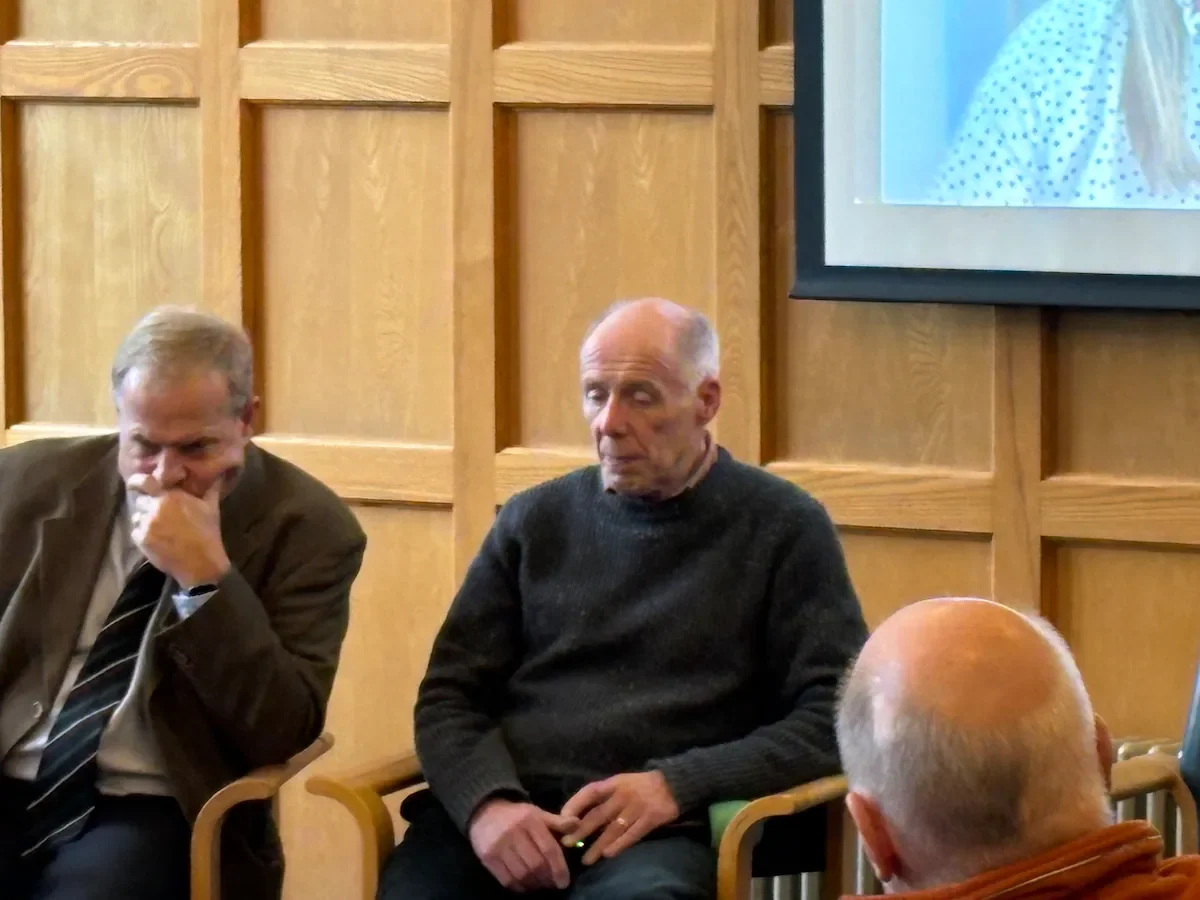
Michael Lynn SC, (Chair of Panel) and Professor Brice Dickson, Independent of the ICRIR at the Conference in Queen’s University, Belfast
Member of Northern Ireland legacy commission said Republic must do more to properly address the past
Mark Hennessy, Common Ground, Irish Times, October 18th, 2025
The Irish State has not investigated, let alone prosecuted Troubles killings cases since the Belfast Agreement, despite endless demands for greater transparency from London, a member of Northern Ireland’s legacy commission has said.
“There has been an amnesty there, not by the law, but in practice. It’s been governmental policy, prosecutorial policy not to prosecute,” said Professor Brice Dickson of the Independent Commission for Reconciliation and Information Recovery.
The Garda Síochána is “only now” setting up a legacy investigations unit when “it should have been doing that for the last 27 years, or so”, Prof Dickson said at Queen’s University Belfast.
“I hope the Irish Government will do the right thing and start contributing properly to dealing with the past in Northern Ireland,” he told a conference organised by Truth Recovery Process, which is seeking a South African-style truth and reconciliation system.
People living in the Republic suspected of crimes committed in Northern Ireland could have been prosecuted in Dublin under the Criminal Law Jurisdiction Act 1976, “which was passed expressly for that purpose”, he went on.
The criticisms of the Irish State were supported by leading Irish academic, Fionnuala Ní Aoláin, who was twice nominated by Dublin to be a judge of the European Court of Human Rights.
The Minnesota-based academic told the conference successive Irish governments are worthy of serious criticism for failing to investigate killings in The Troubles, despite demanding such transparency from the British.
“There’s been not just hesitancy, but unwillingness and foot dragging at an extraordinary rate to address the same kind of pertinent questions we’ve been asking in Northern Ireland since the early 1980s,” she said.
There has been “historic and sustained institutional resistance” across multiple governments in Dublin properly “to address the institutional and legal legacies of the conflict in the Republic”, she said.
Equally, she said, there has been zero public demand in the Republic for greater transparency. However, the creation of a Garda legacy unit, agreed with London last month, is “a major departure”.
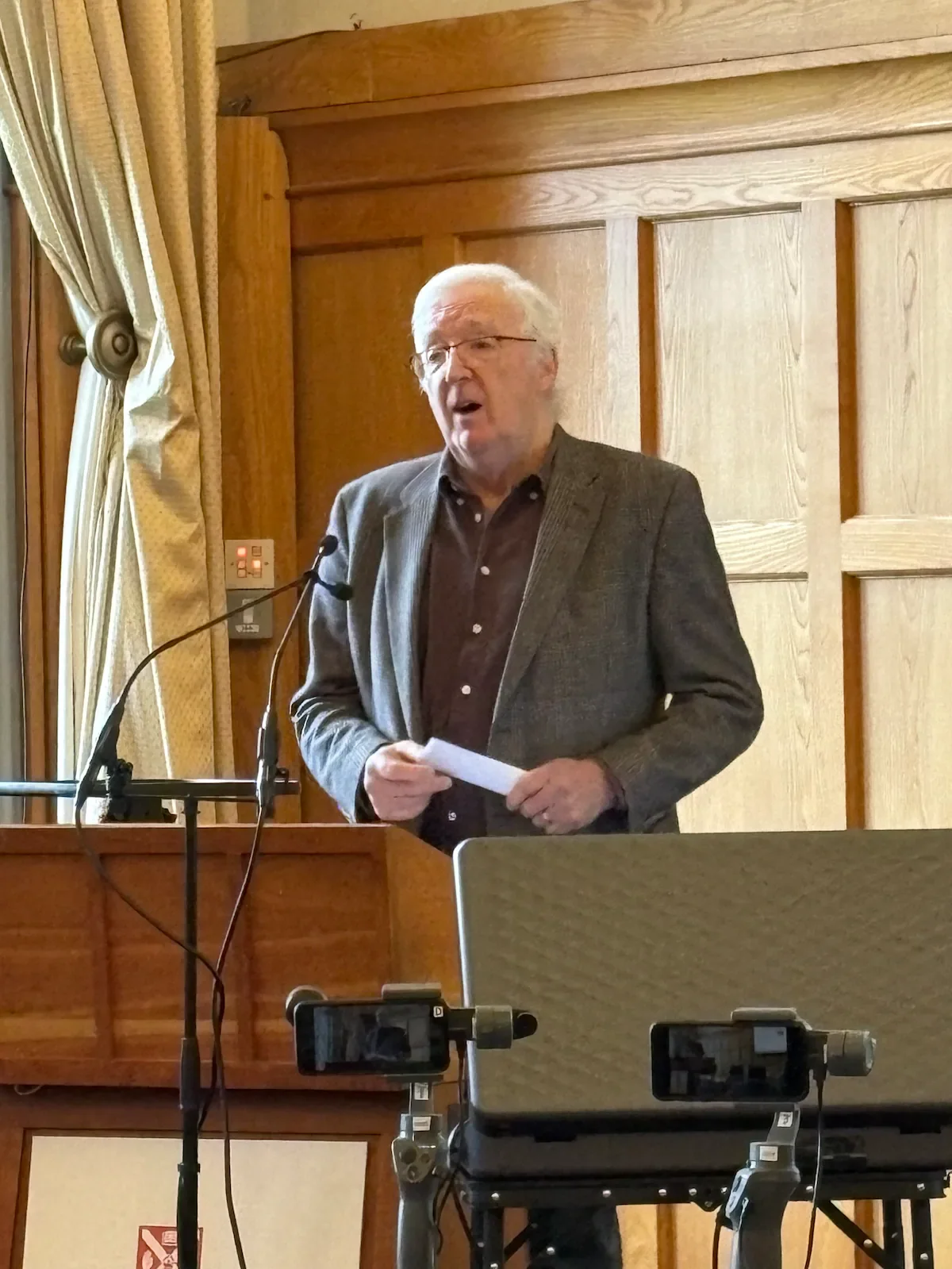
Irish State must offer same honesty it demands from Britain on Troubles
Meanwhile, the Southern Chair of the Truth Recovery Process, John Green, said the Irish Government must be prepared “to open its books” about files held on killings during The Troubles, rather than simply lecturing London.
Truth Recovery Process favours a South African-style truth and reconciliation hearings to unearth the truth behind killings during The Troubles, where conditional amnesties would be offered in return for truthful testimony.
Speaking to the Queen’s conference, Mr Green said the Irish Government “does not accept that there is a problem” with the level of information that has been shared to date by the Irish State.
“We are sitting here on our high horses and talking about sending (the British Government’s 2023 Legacy Bill) to Europe, or wherever, and yet we haven’t done a thing,” said Mr Green, a former chair of the Glasnevin Trust.
Greater transparency by Dublin would offer it “the high moral ground”, so that it could put pressure upon paramilitaries to reveal information about the deaths of its victims: “They are quite happy to do nothing while this goes on,” said Mr Green.
The same charge can be levelled at London, too, he said: “We believe that both governments have to open their books and not hide behind sensitive information rules, or national security.”
Underlining the importance of handling legacy cases in Northern Ireland in a proper manner, he said: “Reconciliation has got a bit of a bad ring from Leo Varadkar, who’s found his feet now that he’s no longer taoiseach.”
Critical of Mr Varadkar, he said the former Fine Gael leader has “dismissed” Taoiseach Micheál Martin’s belief in “wanting complete reconciliation, as if it’s unobtainable”.
He added: “We do want reconciliation . . . But what sort of reconciliation? It’s not just a matter of people getting over who did what in the past. There has to be a degree of atonement and contrition. And then on the other side, forgiveness. Some people say that’s never going to happen.
“No, it’s not going to happen everywhere, but the fact is that it does happen in some cases, and the proof of the pudding is in South Africa, Colombia, and Chile, and that it acts as a catharsis to society. That’s why we believe reconciliation must be the aim.”
Conditional amnesties are “the single most important thing that we can do to get people to participate and not to be putting up blocks all the way”, but the granting of such amnesties would be dependent upon the agreements of families of victims.
‘Double standards against unionists’ with street sign row in east Belfast
By Ben Lowry, Belfast News Letter, October 18th, 2025
While defacing the dual language sign in Shandon Park was wrong, the Irish signage was opposed by a massive three quarters of residents who replied to a survey about it
While defacing the dual language sign in Shandon Park was wrong, the Irish signage was opposed by a massive three quarters of residents who replied to a survey about it
The Irish language sign row has highlighted double standards towards unionists, including from police.
Nationalists, led by Sinn Fein but also supported by Alliance, introduced what I believe was a provocative Gaelic signage policy in NI’s capital city Belfast some years ago. Now the full nature of that policy is panning out as it was obvious it would, yet – incredibly – unionists have been blamed for sectarianism in opposing a policy that was itself highly tribal.
"Irish signs are alien to us; the sooner they go, the better...
The first double standard was republicans introducing a clearly divisive policy that street signs would become dual language if 15% of residents in a street supported it when surveyed, even if 85% of people in the road opposed it – something that would not be tolerated in reverse.
The second double standard was that police rushed to describe the vandalism of such a sign in Shandon Park in east Belfast (which 75% of those who responded to the survey opposed), as “hate motivated”. This was picked up by the BBC and everyone as a story of apparently straightforward loyalist hatred.
To understand the first double standard, imagine what would have happened if Belfast had introduced a policy that introduced unionist symbolism in signs with a mere 15% support. There would be an immediate, cross-border outcry – in fact an international one because Irish American politicians would soon have become involved, accusing unionists of triumphalism. Conservative politicians in London would have been swift to condemn such a policy, let alone Labour ones.
And in the event of this imaginary scenario, in which unionists were able to put up unionist symbolism with 15% support, there is no possibility that any of the above mentioned groups of politicians, or indeed the media, would have depicted the inevitable outraged nationalist reaction (including certain vandalism, and possible public unrest) as sectarianism. It would be the people who came up with such a triumphalist plan who would at once be depicted as sectarian. Any nationalist vandalism would barely be mentioned, and seen as the fault of unionist provocateurs.
To understand the second double standard, consider a question that we put to police. We were not aware of them ever having put out a press release describing the defacing of a sign that says Northern Ireland (in which the Northern is scrubbed out) or Londonderry (in which the London is scored out) as “hate motivated”, as they did over Shandon Park. But we knew we might have missed such a release over the years, so we asked the police on Monday if they had done so.
They effectively ignored our query in their reply, and continued to appeal for information over what they again called the “hate motivated” attack in Shandon Park.
So think about this two tier policing, and two tier media coverage:
Defaced road signs
Scores of signs in the west of NI, perhaps hundreds, have been defaced by nationalists, signs that merely seek to use the accurate names of places, including the name of Northern Ireland, an entity that was recognised by everyone in the 1998 Belfast Agreement that nationalist Ireland never ceases to cite. Signs such as ‘Welcome to Northern Ireland’ might remind republicans of the current outworkings of the principle of consent, and so be irritating for them to behold, but they are hardly more controversial than Irish signs in areas where the overwhelming majority of residents oppose them. Yet police cannot point us to a single instance of them having called such vandalism “hate motivated” (I think it is safe to conclude that this is because they have not done so).
Far from being embarrassed at their own implied admission of double standards, police reiterated their use of “hate motivated” in Shandon Park.
I deplore any vandalism, of signs or other public property. But I also condemn Belfast’s Irish sign policy. Two years ago I wrote an article describing it as ‘extremist and divisive’. I now describe it as a ‘extremist, divisive and sectarian’.
Am I saying that the Alliance Party is sectarian? No, but on this they have been naive. The party told us this week that they supported the 15% threshold of support in a street as a trigger for consideration by councillors but that they voted against signs such as Shandon Park where there there was shown to be clear opposition. But why not just raise the 15% threshold? I would say to a majority of residents but at the very least to a majority of those who reply.
Home Gown nest of Asian hornets destroyed in Northern Ireland
By Bairbre Holmes, PA, Belfast News Letter, October 19th, 2025
An Asian hornet nest discovered in the Dundonald area of east Belfast has been removed.
The Northern Ireland Environment Agency (NIEA) described the process on Saturday as "safe and controlled" and said its officers worked with a "suitably trained" pest control company.
They also received advice from the UK Animal and Plant Health Agency and had "on-the-ground support" from an official with the National Biodiversity Data Centre in Waterford.
The agency said surveillance will continue in the area and urged "continued vigilance" from the public and the beekeeping community.
The insects were first spotted by a member of the public and reported on October 10 .
It's the first nest of its kind discovered in Northern Ireland and NIEA say Asian hornets pose a "significant threat" to honeybees, native insects, pollinators and local eco-systems.
With a lot to lose, it won't be easy for voters south of Border to choose unity
SAM MCBRIDE, Sunday Independent and Sunday Life, October 19th, 2025
Why should the Republic vote for a united Ireland? For more than a century, the answer to this question has been seen as so self-evident that it rarely even gets asked. If a referendum on unity arrives — and Britain could call one at any time — there is likely to be a significant No campaign south of the Border that will shock and appal many Irish people.
Despite the Republic's electorate showing themselves to be unusually rebellious in referendums, there is an overwhelming assumption that in a border poll this would be different. For those who want a united Ireland, this is dangerously complacent.
For the past year I've been working with Irish Times columnist Fintan O'Toole on a book, For and Against a United Ireland, in which each of us argues both sides of the case for removing the Border. To my surprise, the most challenging aspect was finding practical arguments in favour of unity for voters in the Republic. Yet the Good Friday Agreement means that even if the North votes Yes, if the Republic votes No, unity won't happen.
Such a scenario would be worse than disastrous. It would not only leave Northern Ireland nationalists abandoned, it would counter-intuitively leave unionists doubly defeated; the state they love would be gone, because without a majority in favour of its continuation it would be unsustainable — yet they would find themselves shunned by those in the south. The result would probably be a second referendum in which a chastened southern electorate reluctantly changed its mind; it would be a damaging start to an already tricky union.
The practical case for unity in Northern Ireland is increasingly stark: people in the Republic are on average healthier, wealthier, better educated and will, on average, live more than two years longer than their northern neighbours. If we were starting from scratch without any emotion, without the weight of history and without fears of violence if unity was botched, there would probably be a firm Northern Ireland majority for unity.
But there is in this a border poll paradox: the more successful the Republic is, the more likely Northern Ireland is to vote for unity, yet the easier it is to argue in the Republic that there is too much to lose to take such a gamble.
Southern polling on this is almost worthless because of the public's lack of engagement. If people have barely thought about something, their views now tell us little about how they will feel after a campaign makes the arguments inescapable.
Academic research shows many southern voters have a limited grasp of what unity would mean. It wouldn't be bolting north to south, as they tend to think, but dissolving both states and creating an entirely new country.
In this were happening in the first few decades after partition, such a new creation would in one sense be straightforward south of the Border: the Free State was poorer, with less to lose; the reverse is true today. But this isn't purely about financial wealth. Ireland is one of the world's most successful small nations. It is culturally rich, diplomatically ahead of the far larger UK, has warm relations with all its neighbours and unparalleled influence in the US for a country of its size.
Those living in the Republic often fail to appreciate their privilege. The UN Human Development Index, which measures quality of life, rates it as the seventh-best country in the world. Given those facts, voting for unity involves inescapable risk. Even if every promise made was given in good faith, those making the promises might not be there to implement them. Even if they were, circumstances might make their fulfilment impossible. What is done may well be different to what voters were told would be done.
The second reason it is easier to vote No is that rejecting unity isn't final, but endorsing it is. A second referendum can be held in seven years' time and be repeated indefinitely if there is enough support for unity. "If you don't know, vote No” will be a potent slogan because it won't mean forever rejecting unity, but be framed as asking for more preparation, which sounds reasonable.
Set against this is the fact many people are likely to feel a sense of historic responsibility. They would have a chance to peacefully achieve what many of their ancestors were willing to suffer or die for. The hand of long-gone ancestors will weigh heavily on shoulders in the polling booths.
But what of those whose ancestors are from Poland, Lithuania or Brazil? Mass migration means the electorate will involve many from far-off lands. These people are likely to be more clinical in their assessment of the evidence; what happened in 1690 or 1798 is of little importance to them.
Even for those in the Republic who aren't new migrants, they might think: We and our ancestors have built this magnificent country to become one of the world's most successful small nations; why should we risk epic disruption and possible violence to remove a border that is largely invisible?
Increased global infuence vs increased costs?
Yet there would be substantial gains for the Republic from unity. Its territory would increase by 20pc and its population by 35pc. Ireland's population would surpass those of Norway, Denmark, Finland or Singapore, meaning increased global influence.
Infrastructure could be planned more coherently and there would be economies of scale.
It could rebalance the southern economy, which is dangerously dependent on a handful of US corporate behemoths, and where the sharing out of wealth is not only unjust, but unsustainable. There would be a bigger housing market. Border regions would be reintegrated with their natural hinterlands. The sea border could be policed rigorously, deterring drug-smuggling and people-trafficking.
There would be other, intangible benefits. Unity could mean reclaiming a lost diversity by reintegrating the dissenting Protestant tradition and the Presbyterian culture of logical debate. America's great cultural melting pot demonstrates how disparate traditions can be harnessed to creative effect. It would be a reimagination of what Ireland is, and what it can be.
But persuading largely content southerners to vote for a utopian vision will be far harder than Éamon de Valera or Michael Collins could ever have imagined — paradoxically because the state they helped create has been so exceptionally successful.
'For and Against a United Ireland' is out tomorrow, published by Royal Irish Academy
'Our peace required so much sacrifice': Play inspired by honeytrap killings gets rapturous reception in NYC
ANGELA DAVISON, Sunday Life, September 20th, 2025
PRODUCTION INSPIRED BY INFAMOUS HONEYTRAP KILLINGS HIT NYC PLAY IMAGINES LIVES OF TWO YOUNG SOLDIERS WOEFULLY ILL-PREPARED FOR 70S NORTHERN IRELAND
The use of honeytraps by terror gangs during the Troubles has inspired a new play receiving rave reviews in New York.
The Honey Trap, written and directed by Belfast men Leo McGann and Matt Torney, is reminiscent of the notorious IRA honeytrap killings in March 1971 when three off-duty Scottish soldiers were shot dead in Ligoniel, north Belfast.
It was alleged John McCaig (17); his brother Joseph (18), and Dougald McCaughey (23) were persuaded to leave a bar by a female IRA member who said she would take them to a party.
Set in 1979 and playing at the Irish Repertory Theatre, The Honey Trap centres around two off-duty British soldiers deployed on a four-month tour of Northern Ireland during the Troubles.
Married squaddies Dave and Bobby meet two local girls who lead 21-year-old Bobby to his murder.
Directed by Matt Torney, originally from north Belfast, the play begins with a tormented, middle-aged Dave, recalling that long-ago night to an Irish American graduate student conducting oral history interviews.
Speaking from his home in Atlanta, Torney says: “The play is enjoying enormous success in New York as it conjures the images of growing up in the 70s but people are now very focused on revenge.
“It's a theme in world politics, especially in America, so it feels very timely.
“The setting is crucial to the play as the writer (Leo McGann) was interested in exploring the perspective of individual British soldiers in Belfast, not as representatives of the State.
History
“Leo's research shows that a lot of the British soldiers coming from England had no idea of what they were walking into.
“All of a sudden these 17-, 18- and 19-year-old young men were dropped into the middle of something where people absolutely hate them and they don't understand why.
“I don't want to speak too much for Leo but the play was prompted when he was doing his masters degree, just up the road from another university where the Boston tapes were recorded.
“The play looks at the idea of that wall of history and what happens when you start digging into the past and things start resurfacing.”
The Boston tapes are secret recordings made as part of a Boston College project in which former loyalist and republican paramilitaries talk about their role in the Troubles, with some admitting involvement in various attacks, including murders.
The PSNI later gained access to the tapes for use as evidence in ongoing murder enquiries.
McGann says the play is not inspiried by one single incident but a number of terrorist honey traps over the 70s and 80s.
Torney admits he had a good childhood in north Belfast, growing up on the Cavehill Road and attending Belfast Royal Academy (BRA) — but he caveats that by adding: “As well as being a sleepy suburb, a lot of stuff happened around there.
“I was born in 1981. My personal knowledge of the Troubles is very much as a child in the 80s which I think is very different than if you were a teenager or child in the 70s.
“It's not an unusual childhood for Belfast, it's an experience shared by tens of thousands of people. It doesn't actually feel special when you grow up in it but it was still deeply impactful and sometimes it was just mundane.
“In the 90s, I was coming of age around the Good Friday Agreement, basically the same sort of timeframe as Derry Girls.
“The worst of the Troubles happened before we were born. The people that were really affected by it were adults when we were teenagers, trying to make sense of it.
Crazy
“It's only when you step away that you realise it's different.”
The 44-year-old director is open about how growing up and subsequently leaving Belfast shaped his work as a director. “I went to Dublin, to Trinity College in 1999, and some of the things people thought about Northern Ireland were crazy. Friends down there had never crossed the border,” he explains.
He moved to the US in 2006 to complete his masters in fine arts at Columbia University.
After some time as associate artistic director of Studio Theatre in Washington DC, he relocated to Atlanta, Georgia and the Theatrical Outfit, directing new plays and dynamic productions of classics such as The Lehman Trilogy and Who's Afraid of Virginia Woolf?.
He first started working on The Honey Trap for Solas Nua — a DC-based Irish contemporary arts organisation — with the production nominated for 10 Helen Hayes awards, including Best Director.
Once every year or two, the father-of-two will travel to another city to do a show and is open to coming back to Belfast.
But his focus, for now, is The Honey Trap, which has been a hit for audiences and critics alike, earning plaudits from The New York Times which named it its “critic's pick”.
“There's something about doing this story to an American audience in an Irish theatre and seeing the impact it's having. We're getting standing ovations every night, it's just turned into this massive hit,” Torney says.
“There's something really special about two immigrants from Belfast working together on a play. The challenge then is to bring a group of American actors into this world and make it real for them.
“It isn't a history play, it's more about what would you do if someone harmed someone you love and someone gave you information about that.
“There are moral questions at the core of it. What is justice? What price would you pay for peace? What will a community have to let go of to move forward? It's massive. The Good Friday Agreement was such a major moment but it involved a lot of sacrifice.”
The Honey Trap was first premiered in 2023 in Washington, where it played for five weeks and got “shaped and formed”.
Its New York opening was on September 28 and it will run through for a limited time until November 9 at the Irish Rep, the only year-round theatre company in New York City devoted to bringing Irish and Irish-American works to the stage.
Torney says the theatre goes to great lengths to invest in Irish artists and the renowned theatre even imports Irish teabags for its green room.
INTENSITY
And he is keen for the play to tour the UK and Ireland, saying: “I would love to as I think it is a play that would really resonate.
“In the past, there is this moment of intensity and conflict and, in the present, there is trauma and questions about how you cope with the past when it still lives in people.
“For me, it's not about politics, it's about childhood. So many of my friends didn't make it. Others just never talk about it.
“The friends that I would have lost through the Troubles would have less been to political violence and more to drugs or suicide; violence that happens in all cities but there's just a particular flavour of it in Belfast.
“Two streets away from where I grew up was where Thomas Devlin was murdered (in 2005). It was a gang thing, it wasn't even the Troubles, just the way violence lives in the communities.
“The Esso garage that he was walking to is just around the corner from my house. My heart breaks for his family.”
It's not surprising that Torney is an advocate of art and the healing it can bring.
“Art is something that can help us make sense of difficult things. The more people can participate in that the better,” he says.
“I wish there was more funding and investment in arts as a tool for peace, healing and change in Northern Ireland.
“I absolutely love the theatre companies in NI and the work that they do, especially Prime Cut and their artistic director Emma Jordan, and I have a deep love for the Lyric where I had a lot of formative experiences.
“Theatre is gaining in relevance as our experience is becoming increasingly digitised and dislocated online.”
Victims' group fury over IRA monument in Fermanagh
JOHN TONER, Sunday Life, October 19th, 2025
REPUBLICANS REWRITING PAST WITH MEMORIAL TO 'VOLUNTEERS', SAYS SEFF CHIEF DONALDSON
The erection of a monument to dead IRA members in Fermanagh has drawn criticism from a victims' group.
Members of a republican group called the 1916 Societies placed a three-ton limestone memorial outside Lisnaskea last weekend.
It is dedicated to members of the IRA's South Fermanagh Brigade who were “killed in action”, or died in accidents or of natural causes.
Posting images of the stone on Facebook, the group said it was a “monument to honour and remember all IRA volunteers in the South Fermanagh area who gave their lives for a 32 county socialist republic”.
Revisionism
The South East Fermanagh Foundation (SEFF), a victims' rights group, condemned the memorial for whitewashing the past.
Director Kenny Donaldson said: “Because of the (kind of) actions commemorated on this latest monument of terrorism, our organisation was required to be founded.
“The framing of this monument is historical revisionism at its ugliest.
“Let's be clear, the guerrilla terrorist campaign fought in the area and other stretches of the border was motivated by ethnic and sectarian hatred.
“These 'IRA volunteers' murdered their neighbours, principally Protestants, in contravention of the so-called mantra of unifying Protestant, Catholic and Dissenter. The truth is that the only way this unity of people has ever been achieved by militant Irish Republicanism has been through the barrel of a gun and the detonation of bombs. Their legacy is one of terror.”
In their post on Facebook, the 1916 Societies described the monument as “the culmination of months of planning and hard physical work.”
Imperialism
They added: “We were well aware of the potential for mishaps and observations from all those who would oppose our project. It was a slow and arduous task ensuring that when the monument was lifted to be placed on the transporter, there were no accidents then or on the journey to its final destination.
“It also commemorates all volunteers who died (including) accidents or natural causes. But most importantly of all, it is a memorial to all those people who assisted the guerrilla struggle against British occupation and imperialism in Ireland.
“Without those people...the IRA would not exist. The people are always the lifeblood of guerilla resistance.
“We express our deepest appreciation to everyone who helped bring this monument to fruition.
“We also want to thank all those people who stopped at the monument site to congratulate us on such a fitting monument.”
The incident comes hot on the heels of unionist anger over the naming of an event in Fermanagh after an IRA gunman.
Adverts appeared online for an event named the Jim Lynagh Winter School, reportedly organised by the Peadar O'Donnell Socialist Republican Forum.
Lynagh — one of the terror group's most notorious figures — was killed by the SAS during the Loughgall ambush in 1987.
The winter school, which involved talks about republicanism, began yesterday at the former St Eugene's school, near Lisnaskea.
Troubles campaigner decries 'delusional' republicans for naming event after IRA man Jim Lynagh
By Adam Kula, Belfast News Letter, October 19th, 2025
A Troubles campaigner has branded those behind an event honouring an IRA man as “delusional”.
Kenny Donaldson of the Troubles campaign group SEFF (which used to stand for South East Fermanagh Foundation, and now stands for Supporting, Empowering, Fair and Focused) added his voice to those expressing disgust at the Volunteer Jim Lynagh Winter School gathering at the weekend.
It took place on Saturday in the former St Eugene’s Primary School to the east of Lisnaskea in south-east Fermanagh.
It was billed as involving talks about “republicanism in the Tyrone, Fermanagh and the border counties, past, present and future” and “Palestine, Ireland and the Black and Tans: imperialism past, present and future”.
Jim Lynagh is understood to have been the leader of the Loughgall operation in which he lost his life.
The school site is no longer in the hands of the Catholic Church, which sold it around four years ago. Nor are the Department of Education or Education Authority involved in the site.
Lynagh was understood to be the leader of the IRA gang involved in the Loughgall ambush in 1987, when eight IRA men (and one civilian) were killed after being ambushed while attacking a police station with guns and a bomb.
Lynagh was also a Sinn Fein councillor, but was said to have wanted to break away from the provisional movement and forge an even more militant path.
Mr Donaldson said: “Jim Lynagh was a systemic terrorist directly linked to approximately 30 murders (with some intelligence analysts believing this to be a conservative estimate).
"Amongst murders he is strongly linked to are the murders of the Stronges – Sir Noman and his son James at Tynan Abbey, which was then burnt down in the aftermath of the assassinations.
"Jim Lynagh held a reputation for ruthlessness. His nickname was 'The Executioner' and he lived up to that brand over many years.
"At the point of Loughgall, Jim Lynagh along with a small group of others was planning a departure from the control of The Provisional IRA to mount an all-out offensive campaign against army and police installations along the border.
"Sinn Fein seeks to attach itself to the legacy of Jim Lynagh which is scandalous on several levels.
"Firstly, that they would connect with a bloodthirsty terrorist who was involved in the murder of his own neighbours without hesitation, but also that they would seek to engineer a revisionist version of history that he died whilst linked to the Provisional Irish Republican strategy.
"He was not – he ceased to believe in it.
"Thus the choice of venue for this event planned within a former School in south Fermanagh - St Eugene's is all the more chilling.
1916 Societies
"The 1916 Societies and their fellow travellers are the organisers. The choice of venue for the event is quite purposeful: they are seeking to send a message that they are able to permeate somewhere which was once a place of learning and safety for the purpose of holding an ideologically motivated event, named after one of the most infamous and cold-blooded terrorists of the entire terrorist campaign – an individual who was wedded to crime, crimes motivated by ethnic and sectarian hatred…
"For those families and individuals impacted by the terror reign of Jim Lynagh (Provisional IRA commander for the East Tyrone/North Monaghan Brigade) there is no end to their pain.
“Witnessing such an individual held up as an honourable community leader illustrates the delusional thinking of those involved and supportive.”
The late politics editor of the News Letter Henry McDonald, during his time at The Guardian, wrote that a book published in 2002 – A Secret History of the IRA – revealed that Lynagh and two other men had “discussed procuring arms independently of the IRA” with their aim being “to go on the offensive, destroying police stations and seizing territory to establish so-called 'liberated zones' inside Northern Ireland”.
"Lynagh, McKerney, the bulk of the IRA unit killed at Loughgall and McElwaine were becoming increasingly disillusioned with the republican movement's direction, and in particular the policies of Sinn Fein leader Gerry Adams,” wrote Mr McDonald.
“That frustration led Lynagh's men towards mutiny."
Troubles campaigner decries 'delusional' republicans for naming event after IRA man Jim Lynagh
By Adam Kula, Belfast News Letter, October 19th, 2025
A Troubles campaigner has branded those behind an event honouring an IRA man as “delusional”.
Kenny Donaldson of the Troubles campaign group SEFF (which used to stand for South East Fermanagh Foundation, and now stands for Supporting, Empowering, Fair and Focused) added his voice to those expressing disgust at the Volunteer Jim Lynagh Winter School gathering at the weekend.
It took place on Saturday in the former St Eugene’s Primary School to the east of Lisnaskea in south-east Fermanagh.
It was billed as involving talks about “republicanism in the Tyrone, Fermanagh and the border counties, past, present and future” and “Palestine, Ireland and the Black and Tans: imperialism past, present and future”.
Jim Lynagh is understood to have been the leader of the Loughgall operation in which he lost his life.
The school site is no longer in the hands of the Catholic Church, which sold it around four years ago. Nor are the Department of Education or Education Authority involved in the site.
Lynagh was understood to be the leader of the IRA gang involved in the Loughgall ambush in 1987, when eight IRA men (and one civilian) were killed after being ambushed while attacking a police station with guns and a bomb.
Lynagh was also a Sinn Fein councillor, but was said to have wanted to break away from the provisional movement and forge an even more militant path.
Mr Donaldson said: “Jim Lynagh was a systemic terrorist directly linked to approximately 30 murders (with some intelligence analysts believing this to be a conservative estimate).
"Amongst murders he is strongly linked to are the murders of the Stronges – Sir Noman and his son James at Tynan Abbey, which was then burnt down in the aftermath of the assassinations.
"Jim Lynagh held a reputation for ruthlessness. His nickname was 'The Executioner' and he lived up to that brand over many years.
"At the point of Loughgall, Jim Lynagh along with a small group of others was planning a departure from the control of The Provisional IRA to mount an all-out offensive campaign against army and police installations along the border.
"Sinn Fein seeks to attach itself to the legacy of Jim Lynagh which is scandalous on several levels.
"Firstly, that they would connect with a bloodthirsty terrorist who was involved in the murder of his own neighbours without hesitation, but also that they would seek to engineer a revisionist version of history that he died whilst linked to the Provisional Irish Republican strategy.
"He was not – he ceased to believe in it.
"Thus the choice of venue for this event planned within a former School in south Fermanagh - St Eugene's is all the more chilling.
"The 1916 Societies and their fellow travellers are the organisers. The choice of venue for the event is quite purposeful: they are seeking to send a message that they are able to permeate somewhere which was once a place of learning and safety for the purpose of holding an ideologically motivated event, named after one of the most infamous and cold-blooded terrorists of the entire terrorist campaign – an individual who was wedded to crime, crimes motivated by ethnic and sectarian hatred…
"For those families and individuals impacted by the terror reign of Jim Lynagh (Provisional IRA commander for the East Tyrone/North Monaghan Brigade) there is no end to their pain.
“Witnessing such an individual held up as an honourable community leader illustrates the delusional thinking of those involved and supportive.”
The late politics editor of the News Letter Henry McDonald, during his time at The Guardian, wrote that a book published in 2002 – A Secret History of the IRA – revealed that Lynagh and two other men had “discussed procuring arms independently of the IRA” with their aim being “to go on the offensive, destroying police stations and seizing territory to establish so-called 'liberated zones' inside Northern Ireland”.
"Lynagh, McKerney, the bulk of the IRA unit killed at Loughgall and McElwaine were becoming increasingly disillusioned with the republican movement's direction, and in particular the policies of Sinn Fein leader Gerry Adams,” wrote Mr McDonald.
“That frustration led Lynagh's men towards mutiny."
SAS soldiers who killed Loughgall IRA team 'deserve our gratitude' says Veterans Commissioner
By Adam Kula, Belfast News Letter, October 19th, 2025
The SAS soldiers who killed eight IRA men in an ambush at Loughgall "deserve our gratitude", says the Northern Ireland Veterans Commissioner.
David Johnstone was speaking after it was revealed last week that a long-dormant inquest into the deaths of the IRA team – and an unarmed civilian – is to be revived under the government's legacy plans.
SAS soldiers who killed Loughgall IRA team 'deserve our gratitude' not a long legal process says Northern Ireland Veterans Commissioner
Mr Johnstone told the News Letter that such inquests "can be used to rewrite the narrative in favour of terrorists".
Northern Ireland Secretary Hilary Benn had told the House of Commons on Tuesday that nine Troubles inquests are set to resume under the Labour government, Loughgall being among them.
Meanwhile a raft of others will be "sifted" to establish if they should go ahead as inquests, or instead be passed to the new Legacy Commission for investigation.
The move to revisit Loughgall drew sharp criticism from unionists.
The previous government had put a stop to Troubles inquests with its Legacy Act, amid concern that they were focusing unduly on alleged state wrongdoing.
Labour plans to scrap the Legacy Act, and bit by bit their plans for what will replace it are emerging.
Revisiting Loughgall will anger and disappoint veterans
Mr Johnstone said that "the confirmation that the 1987 Loughgall incident is going to restart as a coroner’s inquest will leave many veterans angry, frustrated, bewildered and disappointed", adding that "veterans believe this is as much about appeasement as it is about seeking truth".
He said: "The SAS soldiers at Loughgall deserve our gratitude; they should not instead be dragged through an elongated legal process, used to deflect from the true purposes of the ruthless armed sectarian murder gang who set out to murder that day."
He went on to add: "No family in the troubles should be denied truth and, where appropriate, justice.
"However, many veterans believe that the coronial legal system makes provision for a protracted legal process that can be used to rewrite the narrative in favour of terrorists and demonise those that were sent out under lawful orders to execute approved operations."
A UK government spokesperson told the News Letter: "As the government has long committed to, the small number of inquests that were halted by the Legacy Act will be able to proceed.
"Any veteran asked to give information will have full access to the MoD’s legal and pastoral services and will have those new protections provided by the legislation relating to inquests, including not having to travel to Northern Ireland."
Responding to the Secretary of State's announcement in the Commons on Tuesday, Tory MP David Davis said "it means that 30 years on, the government are dragging veterans into court over an operation that stopped eight heavily armed IRA murderers – men who had already killed and who were on their way to kill again, with weapons that had been used in 40 previous murders".
He added: "Let us be clear: by stopping the attack, those soldiers prevented the murder of many more innocent Northern Ireland citizens.
Persecuted for doing their duty
"What justice is served by punishing those brave soldiers with a stressful and unnecessary process?
"The honourable member for Surrey Heath (Dr Pinkerton) described it as a persecution, punishing them for doing nothing more than their duty.
"Is this really what the Secretary of State intends?"
Mr Benn had replied that there had been "a lot of opposition to the ending of inquests under the Legacy Act", and that "the government came in committed to restoring the inquests that had started and were stopped".
He also pointed out that it had been under a Tory government in 2015 that a fresh inquest into Loughgall was ordered.
An example of the problems which unionists have with the inquest system is the Clonoe inquest.
The coroner in that case delivered his findings in February, saying that the SAS had been unjustified in opening fire on an IRA team who were armed with rifles and had just attacked a police station with an anti-aircraft gun in 1992.
Though coroners’ cases do not involve verdicts of guilty or not guilty, after the findings were delivered the PPS was asked to cast its eyes over them to see if anyone who was there that night should be prosecuted, raising the prospect that the SAS team who killed the IRA men will be charged with criminal offences.
At the time the findings were delivered, DUP leader Gavin Robinson said: “The PIRA team had an anti-aircraft gun mounted on a lorry... If the SAS had not captured that gun, heaven only knows how many innocent lives would have been stolen by the IRA.
“It is outrageous that the focus continues to be placed on those who upheld law and order rather than on those who waged a campaign of terror.”
Anti-immigration protester racks up 113th conviction
JOHN TONER, Sunday Life, October 19th, 2025
NUISANCE FOUND GUILTY OF GIVING COPS FALSE ADDRESS
A self-styled citizen journalist spotted at anti-immigration protests has more than 110 criminal convictions, a court has been told.
Charles Johnston, aka CJ Audits, was found guilty of three driving offences at Laganside Magistrates Court in Belfast on Thursday, bringing his total number of convictions to 113.
The 50-year-old has carved out a career by making a nuisance of himself in public for content on his YouTube channel and social media pages.
He regularly uploads footage of himself arguing with police officers and other public servants.
In a recent clip, Johnston followed and berated the BBC's Stephen Nolan in Belfast city centre.
He represented himself in court on Thursday and was accompanied by anti-immigration protest organiser Stephen Baker.
Johnston contested charges of failing to provide the correct details to police, driving without due care and driving with an incorrect registration mark.
The defendant, who told the court he was on benefits for medical reasons, was found guilty on all counts.
A PSNI officer said Johnston was stopped in his newly purchased Audi A3 on the Belmont Road in east Belfast last June after his passenger “(gave) us the fingers”.
Footage from a body-worn camera was played to the court, showing the officer asking the masked defendant to confirm his details.
Reprimanded
After initially claiming he slept in his car, and being threatened with arrest if he did not provide an address, Johnston said he was living on Bengore Gardens in Larne.
He accepted a ticket for his registration mark not meeting legal requirements but told the officer: “Right now, dismissed. F*** off.”
The officer said: “He took off quite rapidly, and you can hear the wheels spinning as he leaves the kerb.
“He did so without checking his mirrors or indicating on a busy street near a school while I was still standing quite close.”
Police later attended the address provided by Johnston to inform him he was going to be charged with driving without due care, only for the person living there to say they had never heard of him and had been in the property for years.
Police also made enquiries with the letting agent, who said they had no record of him at the address.
Conducting his own defence, Johnston was reprimanded by District Judge Francis Rafferty several times for repeating himself and asking questions irrelevant to the charges.
“This is where I get discriminated against for not being able to read and write,” Johnston said.
The judge replied: “It's not discriminatory. You need to stop asking the same questions.”
The defendant declined to give evidence on his own behalf, with Judge Rafferty concluding: “I have no hesitation to convict.”
Johnston, from Kylemore Gardens in Larne, was fined a total of £350, as well as being ordered to pay a £15 offender levy.
Four penalty points were also added to his driving licence, bringing the total to 11 — just one from being disqualified.
PRESIDENTIAL ELECTION IN REPUBLIC
Extending presidential voting rights to NI ‘would overstep constitutional mark’
By David Young, PA, Belfast News Letter, October, 18th, 2025
Emma Little-Pengelly said the difference between political reality and political aspiration had to be recognised, as she stressed that Northern Ireland’s head of state was the King
Ms O'Neill said it was a "huge democratic deficit" that she, as an Irish citizen, could run to be president of Ireland but yet could not vote in the elections, as she lives north of the border.
In 2013, a constitutional convention in the Republic of Ireland recommended extending the voting franchise to Irish citizens living outside the state.
Such a move would require a referendum on amending Ireland's constitution.
A vote was due to take place in 2019 but was postponed amid the turbulent political context of post-Brexit negotiations focused on the Irish border.
Sinn Fein has been pressing the Irish government to push ahead with the issue but there has been no fresh commitment for a referendum.
Ms Little-Pengelly made clear her opposition to the prospect of the move as she addressed the question following the NSMC meeting on Friday.
"In relation to presidential voting rights, Northern Ireland has a head of state, and that head of state reflects the political reality," she said.
Political realties versus aspirations
"It's the difference between a political reality and a political aspiration.
"And I think we need to be very careful not to overstep into that mark, which is around the delicate equilibrium of the Belfast / Good Friday Agreement, recognising the legitimacy and aspiration, but the difference between aspiration and political reality, in that Northern Ireland remains entirely within the United Kingdom ... and that is the first and key principle of the Belfast / Good Friday Agreement, and that should be reflected and respected." Michelle O'Neill said.
"In terms of the presidential voting rights, that's a huge democratic deficit, obviously," she said.
"I, as an Irish citizen living in the north, could stand for the position, but cannot vote in that election.
"So that's a democratic deficit that I think that we all want to see corrected, and we need to see that done at pace.
"We shouldn't have another presidential election where we're left out."
Taoiseach Micheal Martin told reporters that "a lot of work has to be done" in relation to any move to extend voting rights.
"It would have to be consistent with the ethos of the Good Friday Agreement, the whole parity of esteem issue, and also creating opportunities for people to participate in an election such as the presidency," he said.
"But it would involve a constitutional amendment. It would require that, but there'll be a lot of significant work in respect of it."
Tanaiste Simon Harris said he agreed with Mr Martin's comments on the issue.
FG candidate lambasts Connolly for work with UK banks
NIAMH HORAN, CÓNAL THOMAS and EAVAN MURRAY, Sunday Independent, October 19th, 2025
Presidential candidate Heather Humphreys has issued a stinging attack on Catherine Connolly, saying that in contrast to her opponent, she "never tried to make money out of people's misfortune”.
Speaking exclusively to the Sunday Independent, Humphreys pointed to Connolly's past work as a barrister representing banks in repossessing homes and said she wants voters to know that one difference between her and Connolly is that she always tried "to keep people in their homes”.
The condemnation came as a video went viral last night, amassing over 100,000 views, of a woman questioning Connolly about representing the banks in court on home repossession cases.
In a marked shift in the tone of the campaign, Humphreys yesterday came out fighting with just five days left in the presidential race. She is trailing far behind Connolly, who is leading in the latest opinion poll, on 38pc, with Humphreys 18 points behind on 20pc.
She said: "When I look back at my time as a credit union manager, I'm different to Catherine because before Catherine got into politics and before I got into politics, she was working for UK banks to repossess Irish homes.
"I was working as a credit union manager and I was trying to help people with huge financial difficulties that they face and I was trying to keep them in their homes.
"I have always tried to help people. I've never tried to capitalise on somebody's misfortune and to make money out of it. And that's the difference — and I have a very, very clear record on that.”
When it was put to Humphreys that Connolly would argue that barristers must work under the "cab-rank rule”, which means they have to represent clients regardless of the case, Humphreys said: "There are people obviously that you represent, but you can choose.
"You don't have to take the work of the banks, you really don't and I do know that. I understand if somebody is a criminal they're entitled to a defence, but I think representing banks is somewhat different.”
In a video circulating on social media this weekend, a Galway woman — who confronted Connolly in 2016 after she was elected a TD — says: "I don't understand how you can make speeches about homelessness if you're partly responsible for evicting people out of their homes.” In response, Connolly repeatedly refuses to answer the woman's questions and blames the accusation on what she describes as the "poisonous campaign” directed at her when she was elected to the Dáil for the first time.
Connolly has previously confirmed that she worked for banks during her time as a barrister. In a statement to the Sunday Independent yesterday, when asked to address Ms Humphreys' comments, a spokesperson said: "Catherine practised as a barrister prior to her election to the Dáil in 2016 — and, as with all members of the Bar of Ireland, acted on instructions from solicitors across a range of civil matters.
"The cab-rank rule means that barristers are professionally obliged to take work as it comes, ensuring equal access to legal representation and due process for all.
No legal work since elected
"Catherine has not practised since entering national politics. Her record as a public representative stands entirely for protecting people's dignity, fair treatment and lawful process — including those at risk of losing their homes.
"Any suggestion to the contrary is a Humphreys comes out fighting on campaign's last lap mischaracterisation of both her professional obligations at the time, and of the values that have defined her public life.”
The latest developments come as a blame-game builds within the Coalition over the Fine Gael candidate's disastrous campaign, with Connolly poised to win the Áras.
After losing their own candidate, Fianna Fáil failed to rally around Humphreys in sufficient numbers to get her within reach of the left-wing unity candidate.
Six Fianna Fáil TDs have told the Sunday Independent that they will still be voting for Jim Gavin — even though he has withdrawn from campaigning. His name will still appear on the ballot paper. Among the backbench TDs, Tom Brabazon, Peter 'Chap' Cleere, Padraig O'Sullivan, Cathal Crowe, Erin McGreehan and Malcolm Byrne said they would vote Gavin number one with most then transferring to Humphreys.
TDs Shay Brennan, Willie O'Dea and Séamus McGrath said they would back Humphreys.
Clare TD Crowe said he also planned to give Humphreys his second preference after Gavin, saying it was "a personal decision”. He said his "voting intention is not one that I am not actively canvassing for others to follow”.
Fianna Fáil senator Pat Casey said: "Jim Gavin all the way.”
Carlow-Kilkenny TD John McGuinness's position was representative of many members of his party, saying that "this a matter between me and the ballot box”.
The fallout for Micheál Martin's party is significant. His own popularity has plummeted and a new poll shows they are 10 points behind Sinn Féin.
While Mr Martin has publicly said he will back Ms Humphreys, his TDs and senators are largely staying silent about their intentions.
Yesterday afternoon, party stalwart Willie O'Dea said Fianna Fáil members who vote for Gavin are part of a "protest vote” against "the restrictive choice”.
"People are annoyed,” he said. "People are irritated about the lack of choice.”
He said he would plead with people who are planning to spoil their vote to change their mind, and come out to vote on Friday.
"I would say they don't have to do that to indicate that they're unhappy. The message has been received loud and clear, that something needs to be done about making it easier for somebody who wants to contest the presidency to get nominated. So they should vote. There is still a choice in who can win this.”
Businessman and former Dragons' Den star Seán Gallagher also called on Fianna Fáil TDs to come out in support of Ms Humphreys.
"What's at stake in this election is not the reputation of any individual, but the reputation of the country — in terms of our relationships abroad with our allies at a very sensitive time,” said Mr Gallagher yesterday.
"I would appeal to Michéal to issue a plea to all the members and supporters to come out and support their coalition partner and former ministerial colleague. She is somebody who represents very similar values and policies that are very aligned with Fianna Fáil's.”
Tánaiste Simon Harris also made another impassioned plea to voters. His party is still hoping to see a "shy” vote for Heather.
"We've seen in the past where there's a shy Fianna Fáil vote that doesn't show up in polls — so it's possible,” said one source.
'It's a big hill to climb' can Humphreys close the gap?
Cónal Thomas, Sunday Independent, October 19th, 2025.
The latest presidential opinion poll has put Independent TD Catherine Connolly on what seems to be an unassailable lead heading into the last week of the campaign at 38pc to Heather Humphreys' 20pc.
But even if that led some in the Fine Gael camp to privately admit Humphreys would likely lose the race, they are not saying it publicly just yet.
Either through hope or delusion, Fine Gael has rejected the doomsayers, insisting as its party leader Simon Harris did on Friday that the Humphreys campaign was growing "day by day” — even if the odds look impossible.
"We would not be still canvassing in great numbers if we didn't have some hope,” one Fine Gael minister said.
A boost came late on Friday when Fianna Fáil Transport Minister Darragh O'Brien publicly rowed in behind Humphreys, in line with party leader and Taoiseach Micheál Martin.
However, that will be nowhere near enough to close the 18-point gap in a race many say is already run.
Neither have the endless debates done much to shift the dial, though senior Fine Gael figures insist the Prime Time showdown on RTÉ on Tuesday will be crucial.
Connolly will again be scrutinised over her taxpayer-funded trip to Syria after photos emerged of her pictured beside Saed Abd al-Aal, a pro-Assad militia leader of a group responsible for killing and starvation in a Palestinian refugee camp.
Also in the firing line on questioning will be her decision to hire a woman convicted of gun crimes, and her stance on the European Union and international affairs.
Humphreys will face scrutiny on her record in government, outstanding questions in relation to an animal cruelty case, and accusations made by the mother of cyclist Shane O'Farrell, who was killed in a hit-and-run in 2011, that Humphreys did not do enough to help the family during her time in government.
But the ground war is where the balance could shift in the lead-up to the vote on Friday, even if questions are already being asked by some in Fine Gael where things went wrong for their candidate.
"Look, of all the elections that I have been involved in, the presidential is the most volatile. We have always known that,” Agriculture Minister Martin Heydon, Fine Gael's director of elections, told the Sunday Independent.
"I do think people look at a presidential election differently, I don't think they necessarily vote along party lines to the same extent,” Heydon said.
"Therefore we don't expect or think that anyone from any political party will vote a certain way because, let's say in relation to Fianna Fáil, we are in coalition together,” he added.
That concern is privately shared by some in his own party, who expressed a hope that Fianna Fáil could row in behind Fine Gael to give Humphreys a fighting chance this week.
"It's going to be very difficult, very difficult to close the gap,” one party TD said. "We need a big swing. We're working hard within the party to try to sway the voters to come our way. But we know ourselves it will be an uphill challenge,” they said.
Calling on the party leadership and Fine Gael ministers to publicly urge Fianna Fáil voters to rally around Humphreys, the TD said: "That's exactly what we need, big time.”
Another Fine Gael TD said "the only way Heather can close the gap is if a very solid coterie of older voters turn out”.
But "it's a big hill to climb”, they said.
They dismissed suggestions the party should target the Fianna Fáil vote in the final days of the campaign.
Turnout will be key
"People don't like to be told how to vote. Consenting adults will make up their own minds. Turnout will absolutely be key,” they added.
Besides, there is no indication Fianna Fáil plans to publicly come out in droves to support Humphreys.
Amid ongoing concerns around voter apathy in the wake of the Jim Gavin fiasco, senior party figures emphatically said there would be no last-ditch pitch — like Phil Hogan during the closing days of the 2011 general election — to Fianna Fáil voters to lend their vote to Fine Gael.
"I wouldn't expect for a moment Fianna Fáil voters to [automatically] vote for a Fine Gael candidate either,” a third Fine Gael TD said.
That feeling can in part be explained by a split within the Fianna Fáil ranks over who to vote for in the first place.
Fianna Fáil TDs, still raw from the handling of Gavin's departure, are not singing from the same hymn sheet when asked who they say their first preference is going to be on Friday.
Though the majority of the 71-strong parliamentary party failed to state a preference when asked by the Sunday Independent, ministers appear to be backing Humphreys while at least six party TDs said they would give Gavin, who remains on the ballot paper, their first-preference vote.
Ministers who back Humphreys include O'Brien, and junior ministers Timmy Dooley, Niall Collins and Charlie McConalogue.
MEPs Barry Cowen, Billy Kelleher, and Barry Andrews are all backing the Fine Gael candidate.
Among the backbench TDs, Tom Brabazon, Peter 'Chap' Cleere, Pádraig O'Sullivan, Cathal Crowe, Erin McGreehan, and Malcolm Byrne said they would back Gavin on the ballot sheet with most then transferring to Humphreys.
TDs Shay Brennan, Willie O'Dea, and Séamus McGrath also said they would back Humphreys.
If some in the Fianna Fáil ranks have checked out, leaving Fine Gael to scrap it out to close the gulf between Humphreys and Connolly, the latter's camp is pressing ahead above the noise.
Connolly will today canvass in her native Galway after attending a march organised by the Ireland Palestine Solidarity Campaign.
"A poll is just that, it's not an election result,” one source close to the Connolly campaign said.
"So we're going full steam ahead. We have been since the end of July. We're not changing our strategy.”
How about we keep this double act together?
Brendan O’Connor, Sunday Independent, October 19th, 2025
When will it end? It's a bit like a reality TV show that is going on a week too long. We have a limited time span these days for getting excited by anything, and we get annoyed when things outstay their welcome.
The rules of this reality show are ever-changing — but right now it's primarily based on goading two women in the hope that one of them will eventually go postal. In an ideal scenario for the casual viewer, this would happen on Tuesday night on Prime Time, providing a fitting crescendo.
So far no one has snapped, and the candidates have managed to stay on the passive side of aggression, their smiles getting slightly more glacial and brittle each time they are pressed again on the questions they don't like.
Though we are noticing increasing noises, slightly exasperated sighs, little icy impatient laughs when they are pressed on matters they believe they have already dealt with.
There are also the little drive-by swipes they pepper in. Like Heather suggesting in passing that Catherine was a Brexiteer. Or Catherine using the Irish language at every available opportunity. We don't always understand what Catherine is saying every time she flips into the mother tongue, but maybe it roughly translates as "Nil aon Gaeilge ag Heather”.
You could argue that all this is actually a suitable commando course to choose a president. After all, what is the job these days, except to maintain decorum at all times while taking the odd swipe off people carefully and with plausible deniability? So, for example, you could argue that if you can maintain your calm and keep deflecting while the likes of Gavin Jennings and Pat Kenny are chivvying you, then maybe you will maintain your calm when faced with Donald Trump.
You could also argue that this whole process is a kind of revenge in advance. Any issues you have with either of these women, get it all out of your system now — because no one will be able to say boo to one of them for seven years. And whichever one of them becomes president will have to put all the sniping in the past, because they will be a president for all. Even the half of the country who don't feel represented by either of them, according to the latest poll.
Despite the gruelling campaign, this could be the easiest presidential win for quite some time. The generally farcical nature of the nominations process and the withdrawal of Jim Gavin will probably ensure an easier path to nominations for more people in future. Because one thing has been decided by the hive mind at this point: we never again want to end up in a situation like this, where a presidential campaign is two people essentially having the same debate over and over again in front of different moderators.
Though maybe we'll miss all the debates when they're over. Maybe we should put both of them in the Áras, as a Waiting for Godot-style art installation, where they debate for seven years in an eternal circle about who said or did what and when, and who met or didn't meet whom.